
Biological Activity
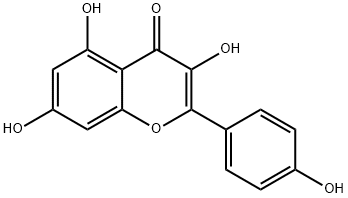
Naturally occurring flavonoid found in Gingko biloba and red wines that activates the mitochondrial Ca 2+ uniporter (EC 50 = 7 μ M). Induces caspase-9-mediated apoptosis in a variety of cancer cell lines via downregulation of polo-like kinase 1 (PLK1) expression. Exhibits antioxidant activity and attenuates osteoclastic bone reabsorption in vitro .
Anticancer Research
Kaempferol is one of the secondary metabolites found in some plants, plant-derivedfoods, and traditional medicines. It is a flavonoid compound obtained from someedible plants including grapes, tea, strawberries, broccoli, tomato, cabbage, leek,kale, endive, and beans. It inhibits growth and migration of pancreatic cancer cellsby acting on proto-oncogene tyrosine kinase (Src), ERK1/2, and AKT pathways(Singh et al. 2016a). It is being investigated in pancreatic and lung cancers toevaluate its antiangiogenic, anticancer, and radical scavenging activities. It showsmoderate cytostatic activity in PC3, HeLa, and K562 human cancer cells. It isidentified as aryl hydrocarbon receptor antagonist and acts against ABCG2 (ATP-bindingcassette subfamily G member 2)-mediated multidrug resistance bypreventing the ABCG2 upregulation in esophageal carcinoma. It induces theapoptosis of ovarian cancer cell by activating p53 in intrinsic pathway mechanism.It is an inhibitor of breast cancer resistance protein (BCRP), quinine reductase-2,and a substrate of BCRP (Calderon-Montano et al. 2011; Wang et al. 2012).