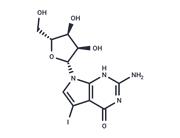
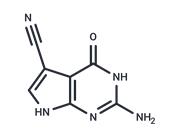
| Name | 7-BFC |
| Description | 7-BFC (7-Benzyloxy-4-(trifluoromethyl)coumarin) is a coumarin-like fluorescent substrate that serves as a biomarker for cytochrome P 450 and can be used to study CYP isoforms and cytochrome P 450 metabolism. |
| In vitro | I. CYP activity detection
1. Material preparation:
1) 7-BFC solution: usually prepared as a 1-10 µM solution, dissolved in an appropriate solvent (such as DMSO or PBS).
2) Enzyme source: CYP subtype (such as CYP3A4, CYP2D6, etc.) expression system, or use human liver microsomes.
3) Reaction buffer: usually use phosphate buffer (pH 7.4) containing NADPH to simulate the in vivo metabolic environment.
4) Fluorescence detection equipment: such as fluorescence spectrophotometer, excitation wavelength 405 nm, emission wavelength 460 nm (specific wavelength depends on the experimental setting).
2. Steps:
1) Prepare the reaction system: mix the 7-BFC solution with CYP subtypes or liver microsomes, and add NADPH as an electron donor.
2) Reaction incubation: Incubate the reaction system at 37°C for 15-30 minutes to allow 7-BFC to undergo metabolic reactions and produce fluorescence.
3) Fluorescence detection: Use a fluorescence spectrophotometer to detect the fluorescence intensity of the product, usually setting the excitation wavelength to 405 nm and the emission wavelength to 460 nm.
4) Data analysis: By measuring the changes in fluorescence intensity, the activity of cytochrome P450 and its metabolic efficiency on 7-BFC can be evaluated.
II. CYP subtype-specific detection
1. Material preparation:
1) CYP subtype inhibitors: such as ketoconazole (an inhibitor of CYP3A4), or inhibitors of specific subtypes.
2) Metabolite analysis: Metabolites can be further analyzed by techniques such as high-performance liquid chromatography (HPLC).
3. Steps:
1) Set up experimental groups: Add different CYP inhibitors to identify the metabolic effects of specific CYP subtypes on 7-BFC. 2) Fluorescence detection and data analysis: Compare the fluorescence signal intensity of different inhibitors and untreated samples to further confirm the metabolic characteristics of specific CYP subtypes.
Notes:
1) Reaction conditions: The choice of temperature, pH and buffer will affect the efficiency of the reaction and should be optimized according to the experimental requirements.
2) Solvent effect: When dissolving 7-BFC, a solvent that has no effect on the experimental system should be selected to avoid inhibition of CYP activity.
3) Fluorescence stability: The fluorescence signal of 7-BFC is relatively stable, but long-term exposure to strong light should be avoided.
The above information is based on published literature. Experimental procedures should be appropriately modified to meet specific research demands. |
| Storage | Powder: -20°C for 3 years | In solvent: -80°C for 1 year
Shipping with blue ice/Shipping at ambient temperature. |
| Solubility Information | 10% DMSO+90% Saline : 3.57 mg/mL (11.15 mM), Suspension.
DMSO : 125.00 mg/mL (390.30 mM), Sonication is recommended.
|
| Keywords | Y0400031 | Y040 0031 | Cytochrome P450 |
| Inhibitors Related | Tebuconazole | Oxadiazon | Musk ketone | Naringin dihydrochalcone | Ipriflavone | Benzyl alcohol | Sudan IV | Naringin | Tauroursodeoxycholate | Dibenzothiophene | Clarithromycin | Memantine hydrochloride |
| Related Compound Libraries | Bioactive Compounds Library Max | Bioactive Compound Library | Anti-Aging Compound Library |



 United States