Specification
Items | Specifications | Results |
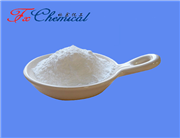
Appearance | White or almost white crystalline powder,odorless | Complies |
Identification | Chemical reaction The retention time complies to the standard infrared absorption spectrum complies to the standard show sodium flame | Positive reaction Complies Complies |
pH | 6.0—7.5 | 6.6 |
Clarity and color of solution | The solution should be clear and colorless | Complies |
Related substances | 5’-CMP ≤0.30% Single impurity ≤0.20% Total Another Impurity ≤0.70% | 0.01% 0.01% 0.03% |
Residual solvents | Limit of methanol ≤0.30% Limit of ethanol ≤0.50% Limit of acetone ≤0.50% | Undetected |
Limit of chloride | ≤0.05% | Complies |
Limit of ammonium salt | ≤0.05% | Complies |
Limit of iron salt | ≤0.01% | Complies |
Limit of phosphate | ≤0.1% | Complies |
Limit of arsenic salt | ≤0.0001% | Complies |
Heavy metals | NMT 10ppm | Complies |
Loss on drying | ≤6.0% | 1.3% |
Endotoxin | ≤0.30 EU/mg | Complies |
Limit of microbe | Total bacterial count≤800 CFU/g Yeast & Mold≤80 CFU/g E.Coli:Negative | 15CFU/g <10CFU/g Undetected |
Assay(HPLC) | ≥98.00% | 99.7% |
Conclusion | The product complies with the enterprise standards. |
Welcome to contact us to get complete COA.
Citicoline Sodium is the sodium salt of the natural compound Citicoline (CDP-Choline). It is the stable, synthetically produced form used in pharmaceuticals and dietary supplements.
In essence, it's the same molecule as CDP-Choline, but complexed with a sodium ion to improve its stability and solubility.
Detailed Chemical Breakdown
Let's break down its structure and properties.
1. Chemical Names and Identifiers
IUPAC Name: Cytidine 5'-(trihydrogen diphosphate), P'-[2-(trimethylammonio)ethyl] ester, inner salt, sodium salt
Systematic Name: Sodium [(2R,3S,4R,5R)-5-(4-amino-2-oxopyrimidin-1-yl)-3,4-dihydroxyoxolan-2-yl]methyl [hydroxy-([2-(trimethylazaniumyl)ethoxy]hydroxyphosphoryl)oxyphosphoryl] hydrogen phosphate
CAS Number: 33818-15-4
2. Molecular Formula
3. Structural Components
The Citicoline Sodium molecule can be visualized as two key parts connected by a diphosphate bridge, with a sodium counterion.
A. Cytidine Moiety: This is a nucleoside, composed of:
Cytosine Base: A pyrimidine base (C₄H₅N₃O) containing an amino group (-NH₂), which is crucial for its biological role.
Ribose Sugar: A 5-carbon sugar (C₅H₁₀O₅).
The cytosine is attached to the 1' carbon of the ribose sugar.
B. Choline Moiety: This consists of:
An ethanolamine group (HO-CH₂-CH₂-N⁺(CH₃)₃).
The nitrogen is permanently charged (a quaternary ammonium cation, N⁺), which makes the molecule highly polar.
C. Diphosphate Bridge: A pyrophosphate group (P₂O₇H₂) connects the 5' carbon of the ribose sugar to the oxygen of the choline's ethanolamine group. This bridge is key to the molecule's energy and function as an intermediate.
D. Sodium Ion (Na⁺): The entire CDP-Choline structure exists as a zwitterion (has both a positive and negative charge). The negatively charged phosphate groups interact with a sodium ion (Na⁺) to form a stable, neutral salt.
4. Key Chemical Properties
Appearance: Typically a white or almost white, hygroscopic (water-absorbing) crystalline powder.
Solubility: It is freely soluble in water due to its ionic and polar nature. This is a critical property for its absorption and bioavailability in the body.
Stability: The sodium salt form is significantly more stable than the free acid form, which is why it is used in solid dosage forms (like capsules and tablets) and pharmaceutical injections.
Why the "Sodium Salt" Form is Important
Using the sodium salt provides major advantages for manufacturing and use:
Enhanced Stability: Prevents the molecule from breaking down during storage.
Improved Solubility: Ensures it dissolves quickly in the gastrointestinal tract for efficient absorption.
Pharmaceutical Suitability: Allows it to be formulated into stable tablets, capsules, and even sterile injectable solutions for medical use (e.g., post-stroke treatment).
Summary
In chemical terms, Citicoline Sodium is the stable, water-soluble sodium salt of the endogenous nucleotide CDP-Choline. Its structure is a elegant combination of a cytidine nucleoside and a choline molecule, linked by a high-energy diphosphate bridge, and stabilized by a sodium ion. This specific salt form is what makes its widespread use in supplements and medicine possible.
Package
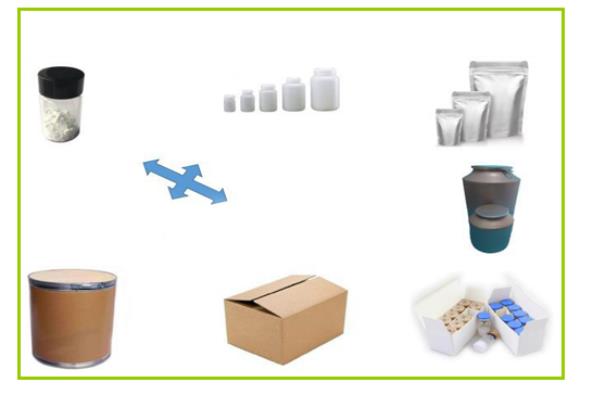
Shipping

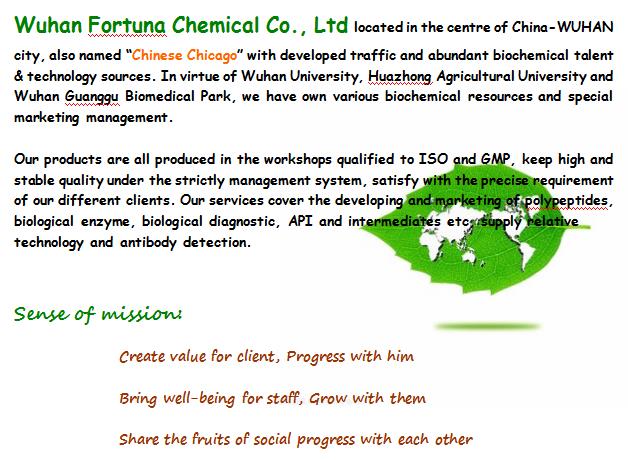
Company informations
Contact information





 China
China