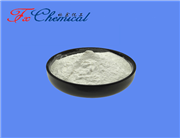
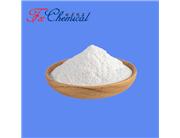
3-Indolebutyric acid Cas 133-32-4
Specification
Items | Specifications | Results |
Appearance | Off-White crystal | Off-White crystal |
Melting Point | 122~124℃ | 122~124℃ |
Residues after Ignition | ≤0.2% | 0.15% |
Loss on Drying | ≤0.5% | 0.24% |
Content | ≥98% | 98.3% |
Conclusion | The product conforms to the above specifications. |
Welcome to contact with us to get more information.
Indole-3-butyric acid (IBA) is a synthetic plant hormone belonging to the auxin class. It is not produced in significant quantities by plants themselves but is the most widely used and effective rooting hormone in horticulture and agriculture. It is valued for its stability, effectiveness, and relatively low toxicity compared to the primary natural auxin, Indole-3-acetic acid (IAA).
Chemical Nature: It is a white to off-white crystalline powder. Structurally, it is similar to IAA but has a longer side chain (a butyric acid chain instead of acetic acid), which makes it more stable and less easily broken down by plant enzymes.
Primary Uses and Applications
IBA's core function is to stimulate adventitious root formation (roots that grow from stems, cuttings, or leaves rather than from the plant's main root system). This makes it indispensable in plant propagation.
1. Rooting of Cuttings (Main Use)
This is the most common and important application. IBA is used to dramatically increase the success rate and speed of root development in stem, leaf, or leaf-bud cuttings.
Ornamental Plants: Widely used for propagating roses, poinsettias, geraniums, ivy, and many woody ornamentals (e.g., azaleas, holly).
Fruit Trees & Vines: Essential for cloning rootstocks and cultivars of apples, cherries, grapes, and citrus.
Forestry: Used for propagating high-value timber species and endangered plants from cuttings.
2. Transplanting Aid
Applied as a root dip or soil drench for seedlings, trees, or other transplants to minimize transplant shock and encourage rapid development of new roots, helping the plant establish quickly in its new location.
3. Seed Germination Enhancement
For some species with dormant or difficult-to-germinate seeds, IBA treatment can help break seed dormancy and promote more uniform germination.
4. Tissue Culture (Micropropagation)
Used in plant tissue culture labs as a component of the growth medium to induce root formation in plantlets grown in vitro before they are transferred to soil.
5. Fruit Set and Growth
In some crops (like tomatoes), low concentrations can be used to improve fruit set and development, though other auxins like 4-CPA are more common for this specific use.
How It Works (Mechanism)
IBA functions as a signaling molecule:
Cell Elongation: It promotes elongation of plant cells in the stem and root.
Root Initiation: At the cut end of a stem cutting, it reprograms undifferentiated cells (parenchyma) near the vascular tissue to become root meristem cells (the "factory" for new roots).
Mobilization of Resources: It directs energy and nutrients to the site of application to fuel root growth.
While IBA itself has weak auxin activity, plants convert a portion of it into the more potent IAA, providing a slow-release effect that leads to sustained, effective rooting.
Application Forms & Methods
IBA is available to gardeners and professionals in several formulations:
| Form | Description | Typical Use |
|---|
| Rooting Powder | IBA powder mixed with talc. Convenient and popular. | Dip the moistened cut end of the stem into the powder, tap off excess, and plant. |
| Liquid Concentrate | IBA dissolved in alcohol or other solvent. Can be diluted to precise concentrations. | Used as a quick-dip (soak cut ends for seconds) or as a long-term soak (diluted). |
| Gel Formulation | IBA in a gel base. Adheres well to the cutting. | Similar to powder; provides good contact with the stem. |
| Pre-treated Strips | Cuttings pre-dipped and dried by commercial growers. | Ready for direct planting. |
Concentration is critical: Herbaceous cuttings require low concentrations (e.g., 500-1,000 ppm), while woody, difficult-to-root cuttings need higher doses (e.g., 3,000-10,000 ppm).
Advantages Over Natural Auxin (IAA)
More Stable: IBA is less prone to breakdown by light and plant enzymes (IAA oxidase).
Longer Lasting: Its conversion to IAA provides a prolonged effect.
More Effective: For rooting cuttings, it is consistently more reliable than IAA.
Less Toxic to Plants: Effective over a wider concentration range before becoming inhibitory.
Safety & Regulation
Toxicity: It has low acute toxicity to humans, birds, and bees but can be an eye and skin irritant.
Environmental Fate: It degrades readily in soil and water.
Regulation: It is a registered pesticide/plant growth regulator in many countries but is widely available to home gardeners.
Summary Table
In essence, Indole-3-butyric acid is the gold-standard synthetic tool for stimulating root growth. Its primary and most valuable use is in the vegetative propagation of plants, enabling gardeners, nurseries, and foresters to reliably clone plants from cuttings.
Packages

Delivery

Payment term
* Wire Transfer/Telegraphic Transfer
* Western Union
* MoneyGram
* L/C
Contact information
Spring Zhang
Email: export@fortunachem.com
Skype: Fortunachem201304
QQ:3169620873
Tel: +86-27-59207892
Website: www.fortunachem.com




 China
China