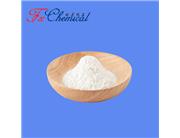
N-Phenyl-bis(trifluoromethanesulfonimide) Cas 37595-74-7
Specification
Items | Specification | Result |
Appearance | White to light yellow crystalline powder | Off-white crystalline powder |
Purity | ≥98.0%(GC) | 99.9% |
Moisture | ≤0.5% | 0.06% |
Welcome to contact with us to get more information.
N-Phenyl-bis(trifluoromethanesulfonimide) is a specialized sulfonating reagent used primarily in organic synthesis. It is known for its exceptional ability to transfer the triflyl group (Tf = CF₃SO₂⁻) to other molecules. Its chemical structure features a nitrogen atom connected to a phenyl ring and two highly electron-withdrawing trifluoromethanesulfonyl groups.
Common Abbreviations: Due to its long name, it is almost universally referred to by its abbreviations:
Key Characteristics and Properties
Appearance: It is typically a white to off-white crystalline solid.
Reactivity: It is a powerful electrophilic triflating agent. This means it is excellent at introducing the -SO₂CF₃ group (triflyl group) into nucleophilic substrates.
Stability: The triflyl group (-SO₂CF₃) is one of the most electron-withdrawing groups known in organic chemistry. Anions derived from it (triflates, OTf⁻) are extremely stable and poor nucleophiles, which is key to their utility.
Primary Uses in Organic Synthesis
PhNTf₂ is a crucial reagent for synthesizing triflates (compounds containing the -OSO₂CF₃ functional group).
1. Synthesis of Triflates (Triflation):
The most common use of PhNTf₂ is to convert alcohols, enols, ketones, and other carbonyl compounds into their corresponding triflate esters (R–OTf).
R–OH + PhNTf₂ → R–OTf + PhNHTf
Why is this so valuable?
A triflate group (-OTf) is an exceptionally good leaving group—far superior to halides like chloride or bromide. It is approximately equivalent to a Tosylate (-OTs) but often more reactive.
2. Formation of Vinyl Triflates:
A particularly important application is the triflation of ketones to form vinyl triflates. These are versatile intermediates that can undergo various cross-coupling reactions, such as the Suzuki-Miyaura or Stille reactions, to form new carbon-carbon bonds. This is a standard method for converting carbonyl groups into alkenes.
3. As a reagent in other transformations:
It can also be used as a strong Lewis acid catalyst or activator in certain reactions due to the ability of the Tf group to stabilize carbocations and other reactive intermediates.
Why is it so Important?
The triflate group (-OTf) installed by PhNTf₂ is a strategic functional group because it turns a relatively unreactive molecule (like an alcohol) into an extremely reactive electrophile. This allows chemists to perform transformations that would otherwise be impossible. The molecule bearing the triflate can readily undergo reactions like:
Nucleophilic substitution: The excellent leaving group ability allows even unreactive nucleophiles to displace it.
Cross-coupling reactions: Triflates are superb substrates for palladium-catalyzed coupling reactions (e.g., with Suzuki, Stille, Negishi reagents) to create complex carbon skeletons.
In summary, N-Phenyl-bis(trifluoromethanesulfonimide) (PhNTf₂, Comins' reagent) is an indispensable tool in modern synthetic organic chemistry for the preparation of highly reactive triflate esters, which serve as key intermediates for constructing complex molecules through subsequent substitution and cross-coupling reactions.
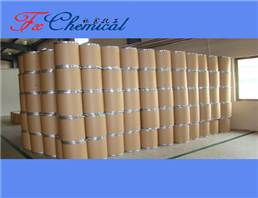
Packages

Delivery

Payment term
* Wire Transfer/Telegraphic Transfer
* Western Union
* MoneyGram
* L/C
Contact information
Spring Zhang
Email: export@fortunachem.com
Skype: Fortunachem201304
Wechat/Whatsapp: 18007136271
Tel: +86-27-59207892
Website: www.fortunachem.com





 China
China