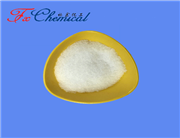
N-Acetyl-L-cysteine Cas 616-91-1
Items | Specifications | Results |
Appearance | White to light yellow powder,odorless | Conform |
Assay ≥ % | 98.5~101.0 | 99.6% |
Specific optical rotation[a]D 20° | +21.3°~ +27.0° | +22.5° |
State of Solution ≥ | 98.0% | >98 |
Chloride (Cl),% ≤ | 0.04 | <0.04 |
Ammonium (NH4),%≤ | 0.02 | <0.02 |
Sulfate (SO4),%≤ | 0.03 | <0.03 |
pH value | 2.0~2.8 | 2.45 |
Loss on Drying | 0.5 | 0.21 |
Heavy Metals(Pb),ppm ≤ | 0.001 | <0.001 |
Residue on ignition | 0.2 | 0.06 |
Melting point | 106~110° | 108° |
Iron (as Fe) ,% ≤ | 0.002 | <0.002 |
Arsenic(As2 o3) ≤ | 0.0001 | <0.0001 |
Conclusion | The test result of the above mentioned product meets AJI92 standard. |
Welcome to contact with us to get more information.
N-Acetyl-L-Cysteine (NAC) is a supplemental form of the amino acid L-cysteine. It is a well-known compound with powerful antioxidant properties and a critical role in replenishing the body's most important antioxidant, glutathione. Due to these actions, NAC has important uses in medicine, particularly as an antidote for poisoning and as a mucolytic (mucus-thinning) agent, and is also widely used as a dietary supplement.
Key Functions and Mechanisms
NAC's benefits primarily stem from two key mechanisms:
Precursor to Glutathione: This is its most vital function. Glutathione is a tripeptide (a molecule made of three amino acids: glutamine, glycine, and cysteine). The availability of cysteine is often the rate-limiting step in glutathione production. NAC is effectively a "delivery form" of cysteine because its acetyl group makes it more stable and bioavailable than taking cysteine directly. Once in the body, the acetyl group is removed, and the L-cysteine is used to synthesize glutathione.
Direct Antioxidant Action: NAC itself is also a potent antioxidant, capable of directly neutralizing a wide range of reactive oxygen species (ROS), which are harmful molecules that cause oxidative stress and damage cells.
Mucolytic Action: NAC breaks the disulfide bonds within the thick, sticky mucus proteins (mucins) in the airways. This action severs the long protein chains, making the mucus thinner, less viscous, and easier to cough up.
Primary Uses and Applications
1. Medical Uses (Clinical Settings)
Acetaminophen (Tylenol®) Overdose Antidote: This is a standard, life-saving use in hospitals. An overdose of acetaminophen depletes the liver's glutathione reserves, leading to the accumulation of a toxic metabolite that causes severe liver damage. NAC works by replenishing glutathione, which neutralizes the toxic metabolite.
Mucolytic Agent: Used in hospital settings (often via nebulizer) and in over-the-counter cough medicines (e.g., ACC) to treat respiratory conditions characterized by thick mucus, such as chronic obstructive pulmonary disease (COPD), bronchitis, and cystic fibrosis.
2. Supplemental and Investigational Uses
NAC is popular as a dietary supplement for a wide range of health goals, though the evidence for some uses is stronger than others.
Mental Health and Neurological Support: Studied for its potential benefits in conditions like obsessive-compulsive disorder (OCD), addiction (e.g., to nicotine or cannabis), bipolar disorder, and trichotillomania (hair-pulling disorder). The theory is that it may help modulate the glutamate system in the brain.
Liver Support: Used to support liver health in non-alcoholic fatty liver disease (NAFLD) and general detoxification due to its role in boosting glutathione.
Fertility (PCOS): May improve insulin sensitivity and ovulation in women with Polycystic Ovary Syndrome.
General Antioxidant Support: Taken to combat systemic oxidative stress, which is linked to aging and chronic diseases.
Safety and Side Effects
NAC is generally considered safe for most people when taken at appropriate doses. Common side effects are usually mild and can include:
Nausea, vomiting, diarrhea
Abdominal discomfort
A harmless "sulfuric" smell (like rotten eggs)
Important Note: While available over-the-counter, it is crucial to consult with a healthcare provider before starting NAC, especially if you have underlying health conditions or are taking other medications, as it can interact with nitroglycerin, blood pressure drugs, and certain chemotherapy treatments.
Summary
In essence, N-Acetyl-L-Cysteine (NAC) is a versatile compound valued for its ability to boost the body's primary antioxidant, glutathione, and directly break down mucus. Its well-established medical applications save lives in cases of poisoning and aid breathing in lung diseases, while its supplemental use continues to be explored for a broad spectrum of health conditions related to oxidative stress and inflammation.
Packages

Delivery

Payment term
* Wire Transfer/Telegraphic Transfer
* Western Union
* MoneyGram
* L/C
Contact information
Spring Zhang
Email: export@fortunachem.com
Skype: Fortunachem201304
QQ:3169620873
Tel: +86-27-59207892
Website: www.fortunachem.com




 China
China