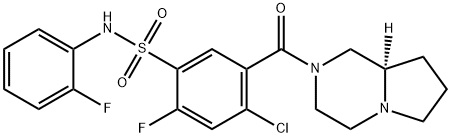
ABT-639 is a T-type calcium channel blocker. It inhibits inactivated-state Cav3.2 channels with an IC50 value of 2.3 μM and inactivated-state Cav3.1 and Cav3.3 channels by 50 and 39%, respectively, when used at a concentration of 10 μM. ABT-639 selectively inhibits inactivated-state T-type calcium currents over resting-state currents in rat dorsal root ganglion (DRG) neurons (IC50s = 7.6 and >30 μM, respectively). It reverses the hind limb grip force deficit in a rat model of osteoarthritic pain induced by monoiodoacetic acid (MIA; ED50 = 2 mg/kg). ABT-639 also increases the paw withdrawal threshold in rat spinal nerve ligation (SNL) and chronic constriction injury (CCI) models of neuropathic pain in a dose-dependent manner and attenuates cold allodynia in the CCI rat model when administered at doses greater than or equal to 3 mg/kg.
ABT-639 is a selective T-type calcium channel blocker with efficacy in a wide range of preclinical models of nociceptive and neuropathic pain.ABT-639 produces robust antinociceptive activity in experimental pain models at doses that do not significantly alter psychomotor or hemodynamic function in the rat.
ABT-639 is a novel, peripherally acting, selective T-type Ca2+ channel blocker.
ABT-639 blocks recombinant human T-type (Cav3.2) Ca2+ channels in a voltage-dependent fashion (IC50=2 μM) and attenuates low voltage-activated (LVA) currents in rat DRG neurons (IC50=8 μM). ABT-639 is significantly less active at other Ca2+ channels (e.g. Cav1.2 and Cav2.2) (IC50>30 mM). ABT-639 has high oral bioavailability (%F=73), low protein binding (88.9%) and a low brain:plasma ratio (0.05:1) in rodents. Following oral administration ABT-639 produces dose-dependent antinociception in a rat model of knee joint pain (ED50=2 mg/kg, p.o.). ABT-639 (10-100 mg/kg, p.o.) also increases tactile allodynia thresholds in multiple models of neuropathic pain (e.g. spinal nerve ligation, CCI, and vincristine-induced, and capsaicin secondary hypersensitivity). ABT-639 does not attenuate hyperalgesia in inflammatory pain models induced by complete Freund’s adjuvant or carrageenan. At higher doses (e.g. 100-300 mg/kg) ABT-639 does not significantly alter hemodynamic or psychomotor function. The antinociceptive profile of ABT-639 provides novel insights into the role of peripheral T-type (Cav3.2) channels in chronic pain states[1].
Zhang, Q., et al. "Optimization of ADME Properties for Sulfonamides Leading to the Discovery of a T-Type Calcium Channel Blocker, ABT-639."Acs Medicinal Chemistry Letters6.6(2015):150429091057009.
Serra, J, et al. "Effects of a T-type calcium channel blocker, ABT-639, on spontaneous activity in C-nociceptors in patients with painful diabetic neuropathy: a randomized controlled trial. " Pain 156.11(2015):2175.
http://www.medkoo.com/products/6989