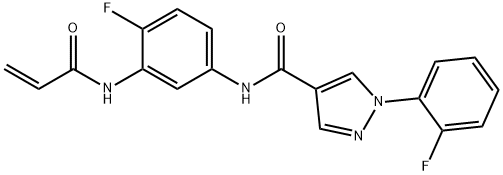
EN6 is a small-molecule in vivo autophagy activator that covalently targets cysteine 277 in the ATP6V1A subunit of the lysosomal v-ATPase. EN6-mediated modification of ATP6V1A uncouples v-ATPase from Rag, leading to inhibition of mTORC1 signalling, increased lysosomal acidification, and activation of autophagy. EN6 also scavenges TDP-43 aggregates (causative agents of frontotemporal dementia) in a lysosome-dependent manner[1].
EN6 is an autophagy activator th at simultaneously upregulates lysosomal vacuolar H(+)-ATPase (v-ATPase) activity and induces its decoupling from the Rag GTPases by covalently targeting v-ATPase subunit ATP6V1A Cys277. EN6 blocks mTORC1 lysosomal recruitment & activation (1-4 hr 25 μM EN6 pretreatment prior to 10-min amino acids (AA) stimulation of AA-starived HEK293) and clears cellular TDP-43 aggregates (25 μM; U2OS with inducible TDP-43). When administered in mice in vivo (50 mg/kg ip.), EN6 inhibits mTORC1 signaling and activates autophagy in both skeletal muscle and heart tissue. Unlike bafilomycin A1 (BafA1), EN6 activates, but not inhibits v-ATPase catalytic activity.