1. a mixture of lithium diisopropylamide (2M in heptane/THF/ethylbenzene with 0.5% [w/w] LiBr stabilizer; 3.8 mL, 7.6 mmol) and THF (3 mL) was cooled to -78 °C under nitrogen protection.
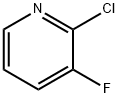
2. a solution of 2-chloro-3-fluoropyridine (1.0 g, 7.6 mmol) in THF (2 mL) was added slowly dropwise for a controlled time of 1 minute.
3. After the reaction mixture was stirred at -78°C for 2 hours, a THF (3 mL) solution of hexachloroethane (2.0 g, 8.4 mmol) was added dropwise.
4. Stirring was continued at -78°C for 2 hr followed by quenching the reaction with saturated aqueous NH4Cl solution (20 mL).
5. The reaction mixture was extracted with EtOAc (100 mL) and the organic phase was dried with anhydrous MgSO4 and concentrated under reduced pressure.
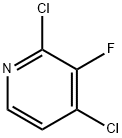
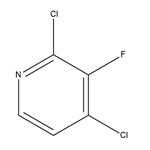
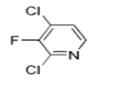
6. The crude product was purified by silica gel column chromatography (eluent: 15% Et2O/isohexane) to afford 2,4-dichloro-3-fluoropyridine (795 mg, 63% yield).
7. converting 2,4-dichloro-3-fluoropyridine (495 mg, 3.0 mmol) to 7-chloro-8-fluoroimidazo[1,2-a]pyridine (225 mg, 44% yield) according to the method of Example 1.
8. brominating 7-chloro-8-fluoroimidazo[1,2-a]pyridine (115 mg, 0.67 mmol) according to the method of Example 1 to obtain 3-bromo-7-chloro-8-fluoroimidazo[1,2-a]pyridine (162 mg, 96% yield).
9. Reacting 3-bromo-7-chloro-8-fluoroimidazo[1,2-a]pyridine (45 mg, 0.18 mmol) with 4-fluoro-3-(pyridin-3-yl)phenylboronic acid (49 mg, 0.19 mmol) according to the method of Example 1 , the title compound was obtained as a white amorphous solid (49 mg, 80% yield).