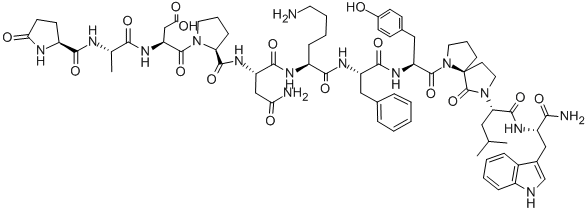
GR 82334 (intrathecal administration; 0.1 nmol-1 nmol) excites rats unnary bladder motihty at 1 nmol but not at 0.1 nmol, and the reflex chemonociceptive is reduced by the topical application of capsaicin (4 μg/50 ul)[1].GR 82334 (10 nM-1 μM; injected between vertebrae L4 and L5) has no effect at 10 nM in neither species, increases heat-induced foot withdrawal latency in mice at doses >100 nM, but no such increase in naked mole-rats, where doses >100 nM evoke a tendency for decreased latency[2].
| Animal Model: | 3-6 month-old, male C57BL/6 mice and 6-18 month-old naked mole-rats[2] |
| Dosage: | 10 nM, 100 nM, and 1 μM |
| Administration: | Lntrathecal injection between vertebrae L4 and L5 |
| Result: | Increased heat-induced foot withdrawal latency in mice. |