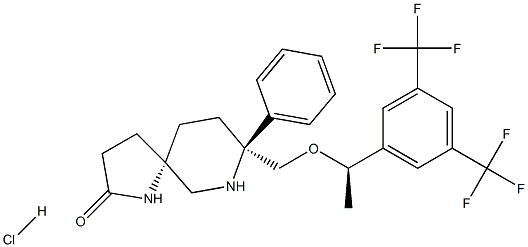
Rolapitant (0.03-1 mg/kg for PO, 0.3-1 mg/kg for IV; single dosage) attenuates the GR-73632-induced foot-tapping response in Mongolian Gerbils[1].
Rolapitant (0.03-1 mg/kg; PO; single dosage; observed for 72 h) blocks acute emesis induced by both apomorphine and cisplatin in ferrets[1].
| Animal Model: | Female Mongolian Gerbils (30-60 g; anesthetized by inhalation of an oxygen:isofluorane mixture after 4 h PO or immediately after IV, then injected with 5 μl of 3 pmol solution of GR-73632 via ICV)[1] |
| Dosage: | 0.03, 0.1, 0.3 and 1 mg/kg for PO, 0.3 and 1 mg/kg for IV |
| Administration: | PO or IV, single dosage |
| Result: | Attenuated dose-dependently the GR-73632-induced foot-tapping response when administered PO 4 h before testing, with an ID90 of 0.3 mg/kg, and the inhibition in foot tapping for at least 24 h.
Blocked dose-dependently the foot tapping induced by GR-73632 when administered IV, with complete blockade observed at 1 mg/kg. |
| Animal Model: | Ferrets (treated with subcutaneous administration of 0.125 mg/kg apomorphine or intraperitoneal administration of 10 mg/kg cisplatin)[1] |
| Dosage: | 0.03, 0.1, 0.3 and 1 mg/kg |
| Administration: | PO; single dosage; observed for 72 h |
| Result: | Blocked dose-dependently acute emesis induced by both apomorphine and cisplatin in ferrets.
Produced a robust decrease in retches and vomits in ferrets that was maintained throughout the 72 h observation period. |