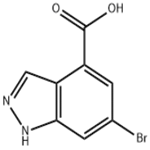
The main synthetic methods for indazole compounds include the formation of phenylhydrazine (or phenylhydrazone) from o-halophenylcarbonyl compounds followed by intramolecular cyclization, diazotization of o-methylaniline compounds, diazotization of indigo, and diazotization of indole. However, these methods all have low yields and complex post-processing, making them unsuitable for large-scale production of indazoles. 6-Bromo-1H-indazole-4-carboxylic acid is a basic raw material in medicinal chemistry, inexpensive and readily available, and can be further synthesized into valuable pharmaceutical intermediates. This paper uses 1H-indazole-4-carboxylic acid as a starting material and introduces a bromine atom at the 6-position of the benzene ring of indazole via a bromination reaction to synthesize 6-bromo-1H-indazole-4-carboxylic acid. The synthesis reaction formula is shown in the figure below:
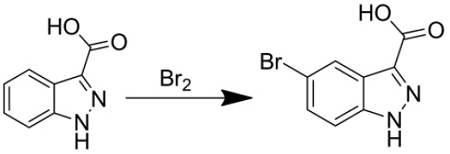
Synthesis reaction formula of 6-bromo-1H-indazole-4-carboxylic acid
At room temperature, the starting material 1H-indazole-4-carboxylic acid was dissolved in anhydrous acetic acid in a three-necked reaction flask. The system was heated and stirred. After the substrate was dissolved and clarified, liquid bromine was dissolved in anhydrous acetic acid and slowly added dropwise. The reaction was refluxed in an oil bath at 90°C for 14 hours. The reaction progress was detected by thin-layer chromatography. Heating was stopped after the reaction was complete. The system became turbid, producing a white precipitate. After cooling in an ice bath and vacuum filtration, the solid was washed first with ethyl acetate, then with diethyl ether, to obtain 6-bromo-1H-indazole-4-carboxylic acid.