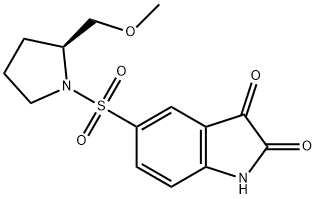
MMPSI is a potent and selective small molecule caspase 3 and caspase 7 inhibitor with an IC50 of 1.7 μM for human caspase-3. MMPSI can significantly reduce ischemia-reperfusion-induced infarct size in the isolated rabbit heart, and reduce apoptosis in both the ischemic myocardium and isolated cardiomyocytes. MMPSI can be used for researching cardioprotection[1].
caspase-3/7 inbibitor i is a potent, reversible, isatin sulfonamide-based inhibitor of caspase-3 (ki(app) = 60 nm) and caspase-7 (ki(app) = 170 nm). is a weaker inhibitor of caspase-9 (ki(app) = 3.1 mm). it has only a trivial effect (ki(app) >25 mm) on the activities of caspase-1, caspase-2, caspase-4, caspase-6, and caspase-8. it has been shown to inhibit apoptosis in camptothecin treated jurkat cells (ic50 ~50 μm). also it has been reported to inhibit apoptosis in chondrocytes (44% inhibition at 10 μm and 98% inhibition at 50 μm). selectivity for caspases-3 and 7 involves unique hydrophobic residues in the s2 pocket surrounding the catalytic cysteine residue. [1] [2] in some systems inhibition of caspases-3 and -7 can prevent apoptosis and may therefore have important therapeutic implications. [3]a potent, cell-permeable, and specific, reversible inhibitor of caspase-3 (ki = 60 nm) and caspase-7 (ki = 170 nm).
human Caspase-3: 1.7 μM (IC50)
1. lee, d., et al. 2001. j. med. chem. 44, 2015. 2. lee, d., et al. 2000. j. biol. chem. 275, 16007. 3. clements, k. m., burton‐wurster, n., nuttall, m. e., & lust, g. (2005). caspase‐3/7 inhibition alters cell morphology in mitomycin‐c treated chondrocytes. journal of cellular physiology, 205(1), 133-140.