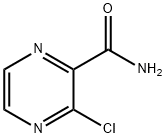
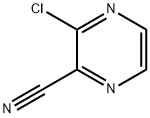
Two methods for the synthesis of 3-chloropyrazine-2-carboxamide from 2-chloro-3-cyanopyrazine are described below:
The first method is based on the homolytic amidation reaction of 2-chloropyrazine, which is less effective. The procedure was as follows: 2-chloropyrazine (0.17 mol) was dissolved in formamide (3.7 mol), heated to 90 °C, and then ammonium peroxydisulfate (0.18 mol) was added in batches over a period of 1 hour. The reaction mixture was continued at 90 °C for 1 h, followed by standing for 24 h at room temperature. Upon completion of the reaction, the mixture was diluted with 100 mL of water, filtered, and the filtrate was continuously extracted with chloroform for 16 hours. A mixture of three positional isomers was obtained by rapid chromatography on silica gel stationary phase.
The second method used the partial hydrolysis reaction of 3-chloropyrazine-2-carbonitrile. The procedure was as follows: powdered 3-chloropyrazine-2-carbonitrile (0.104 mol) was slowly added to a mixture of concentrated hydrogen peroxide (0.95 mol) and water (195 mL) heated to 50 °C. The pH of the reaction mixture was adjusted to about 9 with 8% sodium hydroxide solution and the reaction temperature was maintained between 55 and 60°C. The reaction was stopped after 2.5 hours and cooled to 5°C. The precipitated crystals were collected by diafiltration and purified by recrystallization with ethanol.