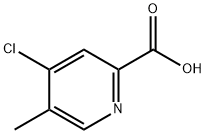
General procedure for the synthesis of 4-chloro-5-methylpicolinic acid from ethyl 4-chloro-5-methylpyridine-2-carboxylate (CAS: 882679-12-1): ethyl 4-chloro-5-methylpyridine-2-carboxylate (10 g, 63 mmol) was dissolved in acetone (80 mL) at 0-5 °C, and potassium permanganate (13 g, 82 mmol) was slowly added to an aqueous solution (500 mL). The reaction mixture was heated to 55 °C and maintained for 1 hour. After completion of the reaction, the mixture was filtered through diatomaceous earth and the filtrate was concentrated under reduced pressure. The aqueous layer was acidified to pH 2-3 with an aqueous solution of 2 M hydrochloric acid.Subsequently, the mixture was extracted with a dichloromethane solution of 10% methanol (3 x 100 mL), the organic layers were combined, dried over anhydrous sodium sulfate, filtered and the solvent was evaporated in vacuum. The residue was crystallized by a solvent mixture of dichloromethane, ether and hexane to afford the target product 4-chloro-5-methylpicolinic acid (5 g, 46% yield). The product was analyzed by LC/MS with ESI m/z (M + H)+ = 172.2.