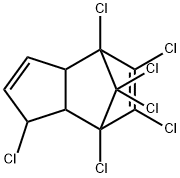
Heptachlor is a soft, white to light tan, waxy, non-combustible, crystalline solid with a
camphor-like odour. Heptachlor is a member of the cyclodiene group of chlorinated insecticides
(aldrin, dieldrin, endrin, chlordane, heptachlor, and endosulfan) and has a long
history following World War II. It was registered as a commercial pesticide in 1952 for
foliar, soil, and structure applications and for malarial control programmes; after 1960,
it was used primarily in soil applications against agricultural pests and to a lesser extent
against termites.
Heptachlor is available commercially as a dust, a dust concentrate, an emulsifiable concentrate,
a wettable powder, or in oil solutions. It is corrosive to metals and reacts with iron
and rust to form hydrogen chloride gas. Heptachlor is incompatible with many amines,
nitrides, azo/diazo compounds, alkali metals, and epoxides but is stable under normal
temperatures and pressures. It may burn, but does not ignite readily. Heptachlor at high
heat and temperature produces highly toxic, corrosive fumes of hydrogen chlorine gas and toxic oxides of carbon. An important metabolite of heptachlor is heptachlor epoxide
which is an oxidation product formed from heptachlor by many plant and animal species.
Heptachlor is almost insoluble in water but soluble in ether, acetone, benzene, and many
other organic solvents.