Chemical Properties
light yellow liquid
Uses
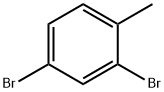
2,4-Dibromotoluene belongs to a series of thymine analogues in which the oxygen substituents of the nucleobase are replaced by hydrogen, fluorine, chlorine, bromine or iodine, giving a systematically increasing size across the series[2]. The deoxyriboside of 2,4-dibromotoluene is converted into a suitably protected phosphoramidite and incorporated into synthetic DNA as a nonpolar thymidine analogue[2].
Synthesis Reference(s)
The Journal of Organic Chemistry, 53, p. 5545, 1988
DOI: 10.1021/jo00258a030
Synthesis
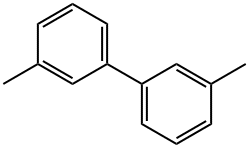
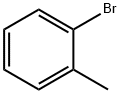
General procedure: 3,3'-dimethylbiphenyl, 2-bromo-5-fluorotoluene, 2-bromotoluene and 2,4-dibromotoluene were synthesized using the following general procedure: boron trifluoride (TFB) was pre-synthesized prior to use according to the literature methods [7-9]. The corresponding aromatics (4 mmol) were dissolved in Freon R 113 (4.1 mL) and the solution was cooled to -25 °C. The corresponding TFB (2 mmol) was slowly added to the aromatic solution under vigorous stirring, followed by removal of the cooling bath. The reaction mixture was stirred at 45 °C for 5 hours. Upon completion of the reaction, the reaction mixture was treated with H2O and filtered to remove the metal fluoride precipitate. Subsequently, the liquid phase was treated with 10% NaNO2 aqueous solution to remove traces of bromine and 30% CaCl2 aqueous solution to remove F- anions. Finally, Freon R 113 was removed from the organic phase by evaporation and the resulting product was purified by rapid chromatography on silica gel, the eluent being a hexane:EtOAc solvent mixture.
References
[1] Journal of Fluorine Chemistry, 2016, vol. 192, p. 120 - 123
[2] Kim, T. W., & Kool, E. T. (2005). A Series of Nonpolar Thymidine Analogues of Increasing Size: DNA Base Pairing and Stacking Properties. The Journal of Organic Chemistry, 70(6), 2048–2053.
https://doi.org/10.1021/jo048061t