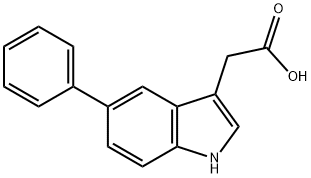
Uses
5-Ph-IAA is a derivative of IAA. 5-Ph-IAA, a ligand, establishes the auxin-inducible degron 2 (AID2) system together with an OsTIR1 (F74G) mutant. AID2 induces rapid and efficient depletion of mAID-fused proteins to study protein function in living cells, causing tumor suppression[1].
Biological Activity
5-Ph-IAA is a derivative of IAA. 5-Ph-IAA is a ligand that together with the OsTIR1 (F74G) mutant establishes the auxin-inducible degron 2 system (AID2). AID2 induces rapid and efficient depletion of mAID fusion proteins to study protein function in living cells. AID2 can suppress tumors.
in vitro
HCT116 cells constitutively expressing OsTIR1(F74G) are exposed to 5-Ph-IAA (1 μM; 6 hours), leading to DHC1-mAC degradation, which means the AID2 system better than the original AID system in generating conditional mutant cell lines.
Western Blot Analysis
| Cell Line: | HCT116 cells |
| Concentration: | 1 μM |
| Incubation Time: | 6 hours |
| Result: | Depleted DHC1-mAC efficiently in HCT116 cells constitutively expressing OsTIR1(F74G). |
in vivo
5-Ph-IAA (0-10 mg/kg; intraperitoneally injection; every day; 7 days), used for the AID2 system , is sufficient to deplete mAID-BRD4 and TOP2A-mAC, leading to tumor suppression.
| Animal Model: | Balb/c-nu female mice (7 weeks old; 16–20 g ) bearing mAID-BRD4 and TOP2A-mAC xenograft tumours cells |
| Dosage: | 0 mg/kg, 1 mg/kg , 3 mg/kg and 10 mg/kg |
| Administration: | Intraperitoneally injection; every day; 7 days |
| Result: | Displayed significant tumor suppression of mAID-BRD4 xenografts and TOP2A-mAC xenografts . |
References
[1] Aisha Yesbolatova, et al. The auxin-inducible degron 2 technology provides sharp degradation control in yeast, mammalian cells, and mice. Nat Commun. 2020 Nov 11;11(1):5701. DOI:
10.1038/s41467-020-19532-z