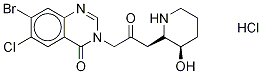
Halofuginone hydrobromid (0.2, 0.5, 1 or 2.5 mg/kg; injected intraperitoneally every other day for 1 month) attenuates progression of OA in anterior cruciate ligament transection (ACLT) mice. Lower concentration (0.2 or 0.5 mg/kg) has minimal effects on subchondral bone and higher concentration (2.5 mg/kg) induces proteoglycan loss in articular cartilage[3].
Halofuginone hydrobromid (0.25 mg/kg; intraperitoneally injected; every day; 16 days) decreases NRF2 protein levels in tumors. While the tumor volumes do not change substantially between treatments with the vehicle, Halofuginone hydrobromid (0.25 mg/kg, intraperitoneally injected, every day) or cisplatin alone. Combined treatment with Halofuginone and Cisplatin significantly suppresses the tumor volume compared to treatment with Halofuginone or cisplatin alone[1].
Intraperitoneal hydrobromid administration of Halofuginone (0.3mg/kg, for 2 weeks) partially reverses the established pulmonary hypertension in mice[5].
| Animal Model: | 3-month-old male C57BL/6J (WT) mice[3] |
| Dosage: | 0.2, 0.5, 1 or 2.5 mg/kg |
| Administration: | Injected intraperitoneally every other day for 1 month |
| Result: | Attenuated progression of OA in ACLT mice. |
| Animal Model: | Male nude mice (BALB/C nu/nu mice) (6-8-week)[1] |
| Dosage: | 0.25 mg/kg |
| Administration: | Intraperitoneally injected; every day; 16 days |
| Result: | The combined treatment with Cisplatin significantly suppressed the tumor volume. NRF2 protein levels in tumors were indeed decreased. |