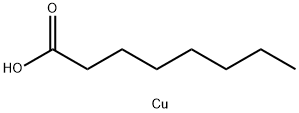
Chemical Properties
Blue liquid. Acidic odor; Lardy/fatty odor
Production Methods
Copper octanoate is produced commercially by combining a soluble copper compound, such as copper sulphate, with octanoic acid.
Mechanism of action
Copper ions denature proteins and disrupt enzyme function in fungal and bacterial cells
Potential Exposure
A copper soap fungicide that controls many common diseases on vegetables, fruits and Copper Octanoate 913 ornamentals, both indoors and outdoors. Treats mildew, including powdery mildew, fruit rots, blue mold, downy mildew, leaf spots, blights, white rust, apple scab, and anthracnose.
Shipping
UN3082 Environmentally hazardous substances, liquid, n.o.s., Hazard class: 9; Labels: 9-Miscellaneous hazardous material, Technical Name Required.
Incompatibilities
Esters are generally incompatible with nitrates. Moisture may cause hydrolysis or other forms of decomposition. Incompatible with oxidizers (chlorates, nitrates, peroxides, permanganates, perchlorates, chlorine, bromine, fluorine, etc.); contact may cause fires or explosions. Keep away from alkaline materials, strong bases, strong acids, oxoacids, epoxides
Waste Disposal
Copper-containing soluble wastes can be concentrated through the use of ion exchange, reverse osmosis, or evaporators to the point where copper can be electrolytically removed and sent to a reclaiming firm. If recovery is not feasible, the copper can be precipitated through the use of caustics and the sludge deposited in a chemical waste landfill
Pesticide Type
Fungicide; Bactericide