Descriptioin
The monohydrate is a yellow solid consisting of monoclinic crystals; density 3.124 g/cm3 at 15°C; loses water of crystallization on heating at 70°C;
sparingly soluble in cold water (1.33 g/L at 18°C); moderately soluble in hot water 25.68 g/L at 70°C; soluble in caustic soda and sodium carbonate solution. The anhydrous acid consists of white hexagonal crystals; density 3.112 g/cm3; converts to molybdenum trioxide, MoO3 at 70°C; slightly soluble in water; soluble in alkalies and sulfuric acid.
The monohydrate is prepared by treating a molybdate solution with nitric acid, followed by crystallization which may take several weeks to separate out as a yellow solid. The anhydrous molybdic acid is obtained as a white crystalline substance by careful dehydration of the yellow monohydrate.
Chemical Properties
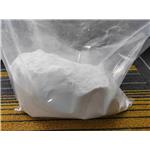
white crystals or crystalline powder
Uses
Molybdic acid is used as a precursor in the production of ammonium molybdate tetrahydrate and molybdenum(IV) sulfide. The mixture of molybdic acid in concentrated sulfuric acid is called as Froehde reagent, which finds application in analytical chemistry for the detection of alkaloids.
Uses
Determination of phosphates.
Definition
Molybdic acid of commerce iseither ammonium molybdate (molybdic acid 85%)or molybdenum trioxide. The use of the term inter-changeably for these compounds has caused con-fusion. Solutions of molybdic acid are very com-plex chemically since they show a great tendencyto polymerize.
reaction suitability
reagent type: catalyst
core: molybdenum
Synthesis
1. Ammonium molybdate nitrate neutralization method will be molybdenite crushed to 60 ~ 80 mesh, in the roaster at 500 ~ 550 for oxidation roasting 6 ~ 8h, leaching with ammonia, to get ammonium molybdate solution, purification and removal of impurities, with nitric acid acid acidification, precipitation of molybdic acid precipitation precipitate precipitation, washed with warm water, centrifugal dewatering, drying, crushing, to get molybdic acid finished products.
2. The hydrochloric acid solution of molybdenum trioxide MoO3 is heated at 40-60C to obtain molybdic acid H2MoO4. In addition, adding concentrated nitric acid to an aqueous solution of ammonium heptamolybdate tetrahydrate (ammonium secamolybdate) (NH4)6Mo7O24-4H2O, a monohydrate is obtained.
3. Molybdenum can be dissolved in AgNO3 solution, precipitating molybdic acid and silver, and the reaction can be carried out quantitatively.
4. The content of about 15% of ammonium molybdate solution added to the same volume of nitric acid solution (relative density of 1.16), then add a certain amount of ammonium nitrate and a small amount of molybdic acid crystals (as the crystal species), stirred well, and then stood until the crystallization of the complete: filtration of the resulting precipitate washed with iced water until qualified, filtering and drying, that is, anhydrous molybdic acid.
5. Add concentrated HNO3 to the aqueous solution of ammonium sec-molybdate to make the solution pH less than 1, or use barium sec-molybdate plus sulfuric acid and get.