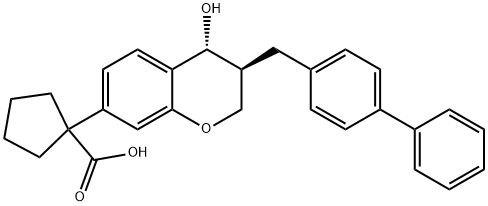
Uses
CP-105,696 has been used as a leukotriene B4 receptor (LTB4R) antagonist to study the influence of the LTB4 pathway in the pathogenesis of acute itch flares in irritant calcipotriol (MC903)+ model allergen ovalbumin (OVA) sensitized murine model of atopic dermatitis (AD)-like disease.
Biochem/physiol Actions
CP-105,696 is an orally active, potent and selective leukotriene B4 receptor (LTB4R) antagonist (IC50 against [3H]LTB4 = 5.6 nM for binding human neutrophils; IC50 = 9.7 nM & 30.3 nM, respectively using guinea pig spleen or mouse membranes) that targets LTB4R high- and low-affinity binding sites in a LTB4 non-competitive and competitive manner, respectively. CP-105,696 inhibits 5 nM LTB4-induced human neutrophils chemotaxis and CDllb upregualtion (IC50 = 5.2 nM and 430 nM, respectively) without inhibiting cyclooxygenase activity or affecting chemotaxis induced by C5a, PAF, IL-8. Oral administration is efficacious against intradermal LTB4 (100 ng/mouse), but not IL-1, injection-induced neutrophil accumulation in mice and guinea pigs (ED50 = 4.2 and 0.26 mgkg, respectively). CP-105,696 in vivo efficacy is also demonstrated in other animal models, including collagen-induced arthritis (CIA; 0.3-10 mg/kg in mice), allergic encephalomyelitis (ED50= 8.6 mg/kg; mice), and asthma (10-30 mg/kg; primate).
in vivo
At a dose of 50 mg/kg/day (28 days), B10.BR (H2k) allografts transplanted into C57Bl/6 (H2b) recipients are significantly protected, as reflected by the mean survival time versus control grafts (27±20 days [n=10] vs. 12±6 days [n=14]; P=0.0146). Using an induction protocol (day -1 to day 3), CP-105696 at 100 mg/kg/day significantly prolongs allograft survival (33±23 days [n=9]; P=0.0026), but CP-105696 at 10 mg/kg/day does not (18±16 days [n=8]; P=0.1433). Syngeneic grafts survive indefinitely (n=11). Immunohistological evaluation of allografts at rejection reveals a mononuclear cell infiltrate composed primarily of CD3+ and CD11b+ (Mac-1+) cells, which are infrequent in syngeneic grafts. Allografts from mice treated with CP-105696 at 50 or 100 mg/kg/day demonstrat a selective reduction in β2-integrin (Mac-1) expression on monocytes/macrophages, as demonstrated by CD11b staining density compared with allograft controls[2].