Biological Activity
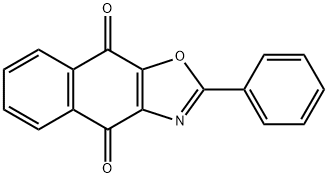
sjb2-043 is a novel and potent inhibitor of usp1 with ic50 value of 0.544 μm [1].ubiquitin-specific protease 1 (usp1) is a deubiquitinating enzyme (dub) and is a member of the ubiquitin-specific processing (ubp) family of proteases. it deubiquitinates a protein in the dna repair pathway of the fanconi anemia (fa) [1].in the k562 cell line, sjb2-043 decreased usp1 levels in a dose-dependent way and caused degradation of the id1 protein, which resulted from proteasomal degradation. also, sjb2-043 decreased the levels of id2 and id3 proteins. importantly, knockdown of usp1 inhibited cell growth and increased apoptosis. in primary aml cells, sjb2-043 inactivated usp1 and promoted id 1 degradation. in primary human cord blood cd34+ cells, sjb2-043 in low micromolar levels inhibited cell growth. in hela cells, sjb2-043 increased the levels of ub-fancd2 and ub-pcna. and deubiquitination of fancd2 is an important step in the brca/fanconi anemia (fa) dna repair pathway [1].
Synthesis
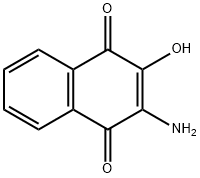
General procedure for the synthesis of 2-phenylnaphtho[2,3-D]oxazole-4,9-dione from 2-amino-3-hydroxynaphthalene-1,4-dione and trimethyl orthobenzoate: 2-amino-3-hydroxynaphthalene-1,4-dione (500 mg, 1.0 eq.), trimethyl orthobenzoate (3.6 mL, 8.0 eq.) and pyridinium p-toluenesulfonate (PPTS, 66 mg , 0.1 eq.) were mixed and the reaction was heated in a 90 °C oil bath for 2 hours. After confirming complete consumption of the raw materials by LC-MS analysis, the reaction mixture was diluted with ether (Et2O) and the resulting yellow precipitate was collected. The precipitate was washed sequentially with ether and ethyl acetate (EtOAc) and dried to afford the target product 2-phenylnaphtho[2,3-D]oxazole-4,9-dione (472 mg, 65% yield) as a bright yellow fluffy solid. The structure of the product was confirmed by 1H NMR (400 MHz, CDCl3) and LRMS (M + H)+: 276.19. 1H NMR data were as follows: δ 7.53-7.62 (3H, m), 7.81 (2H, dd, J = 3.5, 5.9 Hz), 8.25 (1H, dd, J = 3.3, 5.7 Hz), 8.29 (1H , dd, J = 3.1, 5.9 Hz), 8.31-8.34 (2H, m).
References
[1]. helena mistry, grace hsieh, sara s, et al. buhrlage, et al. small molecule inhibitors of usp1 target id1 degradation in leukemic cells. mol cancer ther, 2013, 12(12): 2651-2662.