Description
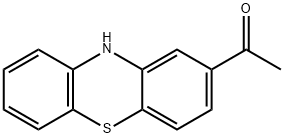
2-Acetylphenothiazine (2-APT) is a selective, cell-active inhibitor of NADPH oxidase 1 (NOX1) that blocks the generation of reactive oxygen species (ROS) in HT-29 cells with an IC
50 value of 0.129 μM. It does not affect xanthine oxidase-dependent or mitochondrial ROS generation. 2-APT prevents ROS-dependent formation of ECM-degrading invadopodia in colon cancer cells. It also abolishes collagen-induced superoxide production by platelets (IC
50 = 306 nM), preventing platelet aggregation and thrombus formation. 2-APT protects beta cells from cytokine-induced apoptosis by inhibiting NOX1. 2-APT can also activate the human transient receptor potential ankyrin 1 (TRPA1) nociceptor at 1-30 μM.
Chemical Properties
Yellow white or green crystalline powder
Uses
2-Acetylphenothiazine is a potent and selective NADPH oxidase 1 (NOX1) inhibitor that blocks NOX1-dependent ROS generation. 2-Acetylphenothiazine has been shown to inhibit SrcYF-induced invadopodia formation in human DLD1 colon cancer cells.
Uses
2-Acetylphenothiazine was used as a NADPH oxidase (NOX) inhibitor in human platelet functional responses and intracellular signaling pathways. It was also used in the synthesis of 2-phenothiazin-2′-yl-cinchoninic acid derivatives.
Definition
ChEBI: 1-(10H-phenothiazin-2-yl)ethanone is a member of phenothiazines.
Synthesis
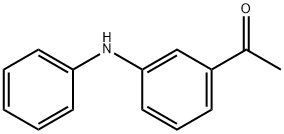
The general procedure for the synthesis of 2-acetylphenothiazine from 1-(3-phenylaminophenyl)-acetophenone was as follows: first, aniline and m-acetylphenol were added to the reaction vessel in a mass ratio of 1.2:1 and heated until dissolved. Subsequently, trifluoromethanesulfonic acid (the amount added was 0.025 times the mass of m-acetylphenol) was added and the dehydration reaction was carried out at 190 °C. The water generated was separated during the reaction. The reaction was terminated after 6 hours. Excess aniline was removed by distillation under reduced pressure to give a dark red solid, 3-acetyl diphenylamine (Compound A). Next, Compound A was added to a reaction vessel with sulfur (molar ratio of Compound A to sulfur is 1:2.3) and 250 mL of acetone (total mass of sulfur and monomers is 1 mole) and heated to dissolve to form a clear liquid. Then, iodine was added (the amount added was 0.0125 times the mass of compound A), and the reaction was stirred and refluxed at 170 °C. After 25 min, the reaction was essentially complete, the stirring was stopped, and the reaction was gradually cooled down to 120 °C, when a yellow and a black delamination was visible. The upper layer of yellow liquid was carefully decanted and a yellow solid was precipitated after cooling at room temperature. The crude product was recrystallized by ethanol-water mixed solvent to give a light yellow solid, i.e., the target product 2-acetylphenothiazine. The total yield in this embodiment was 90.5% and the HPLC purity was 99.7%.
References
[1] Patent: CN105461655, 2016, A. Location in patent: Paragraph 0033
[2] Patent: CN105481793, 2016, A. Location in patent: Paragraph 0038; 0041