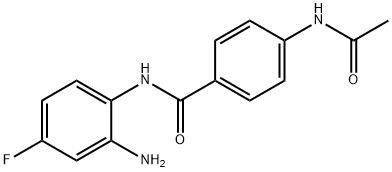
Uses
BRD3308 is a highly selective HDAC3 inhibitor with an IC50 of 54 nM. BRD3308 is 23-fold selectivity for HDAC3 over HDAC1 (IC50 of 1.26 μM) or HDAC2 (IC50 of 1.34 μM). BRD3308 suppresses pancreatic β-cell apoptosis induced by inflammatory cytokines or glucolipotoxic stress, and increases functional insulin release. BRD3308 activates HIV-1 transcription and disrupts HIV-1 latency[1][2][3].
Biological Activity
BRD3308 is a highly selective inhibitor of histone deacetylase 3 (HDAC3) with an IC50 value of 65 nM for HDAC3 vs. IC50 values of 1.08 μM and 1.15 μM for HDAC1 and HDAC2, respectively. BRD3308 protected pancreatic β cells, suppressing inflammatory cytokine-induced apoptosis and increasing insulin release without the toxicity associated with HDAC1 and HDAC2 inhibitors. In a r at model of type 2 diabetes, BRD3308 reduced hyperglycemia and increased insulin secretion without affecting weight gain. In another study, BRD3308 was found to activate HIV-1 transcription, disrupting HIV-1 latency.', 'BRD3308 promotes outgrowth of HIV-1 (human immunodeficiency virus 1) from inactive infected patient cells. It helps to increase β-cell proliferation.
in vivo
BRD3308 (5 mg/kg; intraperitoneal injection; every second day; male Zucker Diabetic Fatty rats) treatment reduces hyperglycaemia and increases insulin secretion in a rat model of type 2 diabetes. At the end of the hyperglycaemic clamp, circulating insulin levels are significantly higher in BRD3308-treated rats. Pancreatic insulin staining and contents are also significantly higher. BRD3308 preserves the functional β-cell mass against glucolipotoxicity in vivo[2].
| Animal Model: | Male Zucker Diabetic Fatty (Obese) rats (6-week-old)[2] |
| Dosage: | 5 mg/kg |
| Administration: | Intraperitoneal injection; every second day |
| Result: | Reduced hyperglycaemia and increased insulin secretion in a rat model of type 2 diabetes.
|
IC 50
HDAC3: 54 nM (IC
50); HDAC3: 29 nM (Ki); HDAC1: 1260 nM (IC
50); HDAC1: 5100 nM (Ki); HDAC2: 1340 nM (IC
50); HDAC2: 6300 nM (Ki); HIV-1
References
[1] Barton KM, et al. Selective HDAC inhibition for the disruption of latent HIV-1 infection. PLoS One. 2014 Aug 19;9(8):e102684. DOI:
10.1371/journal.pone.0102684[2] Lundh M, et al. Histone deacetylase 3 inhibition improves glycaemia and insulin secretion in obese diabetic rats. Diabetes Obes Metab. 2015 Jul;17(7):703-7. DOI:
10.1111/dom.12470[3] Wagner FF, et al. An Isochemogenic Set of Inhibitors To Define the Therapeutic Potential of Histone Deacetylases in β-Cell Protection. ACS Chem Biol. 2016 Feb 19;11(2):363-74. DOI:
10.1021/acschembio.5b00640