Description
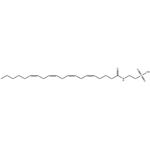
N-Arachidonoyl taurine is an arachidonoyl amino acid. It is oxygenated by 12(S)- and 15(S)-lipoxygenase and is converted to 12-HETE-taurine (12-HETE-T) in murine resident peritoneal macrophages. N-Arachidonoyl taurine is an activator of the transient receptor potential vanilloid (TRPV) channels TRPV1 and TRPV4 (EC
50s = 28 and 21 μM, respectively). It increases calcium flux in HIT-T15 pancreatic β-cells and INS-1 rat islet cells when used at a concentration of 10 μM and increases insulin secretion from 832/13 INS-1 pancreatic β-cells. The levels of N-arachidonoyl taurine are changed in mouse brain following administration of Δ
9-tetrahydrocannabinol (Δ
9-THC).
Uses
N-Arachidonoyltaurine is a polyunsaturated lipid that inhibits the Cav3.3 current in T-type calcium channels.
Definition
ChEBI: A fatty acid-taurine conjugate derived from arachidonic acid.
IC 50
TRPV1: 28 μM (EC
50); TRPV4: 21 μM (Ki)
References
[1] MELISSA V. TURMAN. Oxidative Metabolism of a Fatty Acid Amide Hydrolase-Regulated Lipid, Arachidonoyltaurine[J]. Biochemistry Biochemistry, 2008, 47 12: 3917-3925. DOI:
10.1021/bi702530z[2] DOMINIK P. WALUK . N-Acyl taurines trigger insulin secretion by increasing calcium flux in pancreatic β-cells[J]. Biochemical and biophysical research communications, 2013, 430 1: Pages 54-59. DOI:
10.1016/j.bbrc.2012.11.026[3] EMMA LEISHMAN . Δ9-Tetrahydrocannabinol changes the brain lipidome and transcriptome differentially in the adolescent and the adult[J]. Biochimica et biophysica acta. Molecular and cell biology of lipids, 2018, 1863 5: Pages 479-492. DOI:
10.1016/j.bbalip.2018.02.001

![2-[(1-Oxo-5z,8z,11z,14z-eicosatetraenyl)amino]-ethane sulfonic acid Structure](https://www.chemicalbook.com/StructureFile/ChemBookStructure9/GIF/CB6455578.gif)