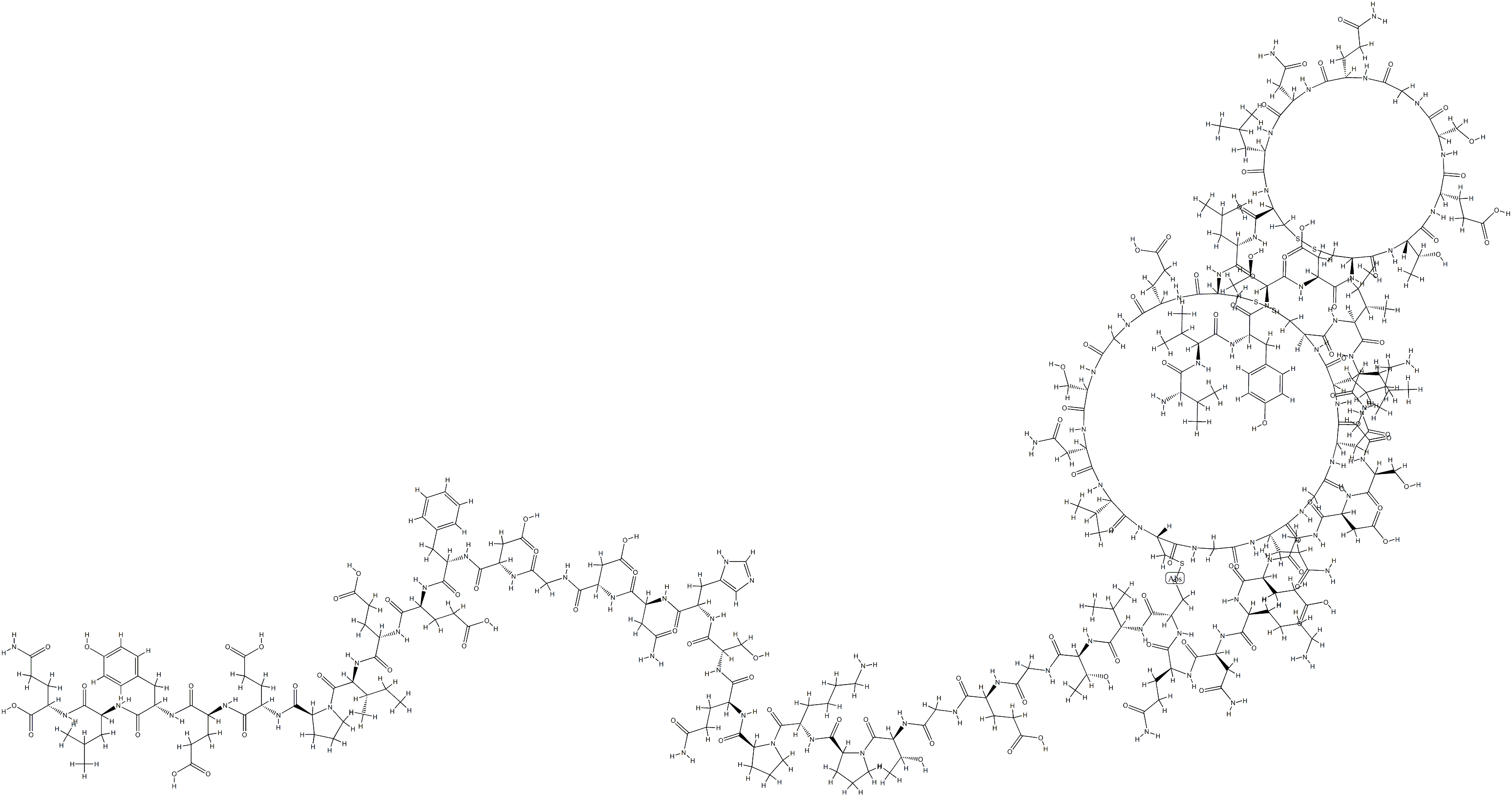
Desirudin (CGP 39393, 0.75-3.0 mg/kg, a bolus plus infusion administration, dogs model of cardiopulmonary bypass) is effective in Inhibiting clot formation[1].
Desirudin (0.01-1 mg/kg, Intravenous injections and subcutaneous injection, rat shunt model) inhibits thrombus development with ED50 values of 0.3 mg/kg (i.v.) and 1.0 mg/kg (s.c.), and inhibits venous stasis thrombosis with ED50 values of 0.01 mg/kg (i.v.) and 0.45 mg/kg (s.c.)[2].
| Animal Model: | Male mongrel dogs model of cardiopulmonary bypass[1] |
| Dosage: | 1.0 mg/kg + 0.75 mg/kg/h, 1.0 mg/kg + 1.50 mg/kg/h, 1.0 mg/kg + 2.25 mg/kg/h, 1.0 mg/kg + 3.0 mg/kg/h. |
| Administration: | Administered as a bolus plus infusion |
| Result: | Inhibited clot formation with no adverse hemodynamic or hematologic effects. |
| Animal Model: | Rat shunt model of thrombus formation on a cotton-thread[2] |
| Dosage: | 0.01-1 mg/kg approximately |
| Administration: | Intravenous injections, subcutaneous injection |
| Result: | Inhibited thrombus development with ED50 values of 0.3 mg/kg (i.v.) and 1.0 mg/kg (s.c.).
Inhibited venous stasis thrombosis with ED50 values of 0.01 mg/kg (i.v.) and 0.45 mg/kg (s.c.).
|