Uses
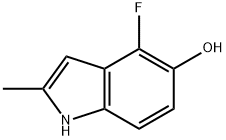
4-Fluoro-5-hydroxy-2-methylindole is used as a pharmaceutical intermediate. It condenses with chloroquinazoline (IX) in hot DMF in the presence of K2CO3 to yield cediranib. Cediranib is a potent, orally administered inhibitor of vascular endothelial growth factor (VEGF) receptors 1, 2 and 3, which blocks tumour angiogenesis and is being investigated in clinical trials for ovarian and brain cancers.
Hazard
4-Fluoro-5-hydroxy-2-methylindole is an irritant. Exposure may cause respiratory tract irritation, skin irritation and severe eye irritation. It is harmful if swallowed or in contact with the skin, causing acute toxicity and dermal toxicity. It is extremely toxic to aquatic organisms.
Synthesis
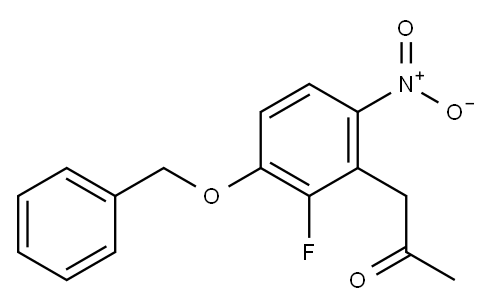
The general procedure for the synthesis of 4-fluoro-5-hydroxy-2-methylindole from 2-acetylmethylene-3-fluoro-4-benzyloxynitrobenzene was as follows: 3-acetylmethyl-1-benzyloxy-2-fluoro-4-nitrobenzene (300 mg, 0.99 mmol) was dissolved in ethanol (10 mL) and acetic acid (1 mL) containing 10% palladium charcoal (30 mg), and the reaction was carried out at 50 °C in a 2 atmosphere of hydrogen at 2 atmospheres for 2 hours. Upon completion of the reaction, the mixture was filtered to remove the catalyst and the filtrate was subsequently evaporated to remove the solvent. The residue was dissolved in ethyl acetate and the organic phase was washed sequentially with aqueous sodium bicarbonate and saturated saline, followed by evaporation of the solvent to afford the crude product 4-fluoro-5-hydroxy-2-methylindole. The crude product was purified by column chromatography using ethyl acetate/petroleum ether (3:7, v/v) as eluent to finally obtain purified 4-fluoro-5-hydroxy-2-methylindole (63 mg, 30% yield). Mass spectrum (MS-ESI): m/z 166 [M+H]+. 1H NMR (DMSO-d6, δ): 2.35 (s, 3H), 6.05 (s, 1H), 6.65 (dd, 1H), 6.9 (d, 1H), 8.75 (s, 1H), 10.9 (s, 1H). 13C NMR (DMSO-d6, δ). 94.0, 106.0, 112.0, 118.5 (d), 132.0 (d), 136.0 (d), 136.5, 142.5 (d).
References
[1] Patent: WO2004/9542, 2004, A2. Location in patent: Page 36
[2] Patent: US2003/207878, 2003, A1
[3] Patent: US2003/212055, 2003, A1