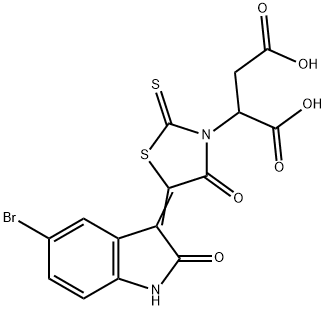
Description
CID-5721353 is an inhibitor of the transcriptional repressor B cell lymphoma 6 (Bcl-6; K
i = 147 μM). It is selective for Bcl-6 over Kaiso, hypermethylated in cancer 1 (HIC1), and promyelocytic leukemia zinc finger (PLZF) at 50 μM. CID-5721353 is cytotoxic against Bcl-6-dependent SU-DLH-6, SU-DLH-4, Farage, OCI-LY7, OCI-LY1, and OCI-LY10 diffuse large B cell lymphoma (DLBCL) cells (GI
50s = 0.024-0.936 mM) but not Bcl-6-independent Toledo or OCI-LY4 DLBCL cells (GI
50 = >15 mM for both). It increases expression of the Bcl-6 target genes
ATR,
TP53,
CD69,
p21, and
CD44 in SU-DLH-6 and SU-DHL-4 cells when used at a concentration of 50 μM. CID-5721353 (50 mg/kg) reduces tumor growth in OCI-LY7 and SU-DHL-6 mouse xenograft models.
in vivo
In order to test whether CID5721353 (Compound 79-6) can perform as an anti-lymphoma therapeutic agent in vivo, whether it can penetrate tumors after parenteral administration through a distal site is determined. For this purpose 107OCI-Ly7 cells are injected into the right flank of 10 SCID mice and allowed to form tumors. Once tumors reach ~1.5 grams, animals are injected IP with a single dose of 50 mg/kg of CID5721353 in 10% DMSO or vehicle (10% DMSO) and sacrificed at 0.5, 1, 1.5, 3, 6, 12 and 24 hours after CID5721353 administration. Blood and tumors are harvested. Quantitative HPLC/MS analysis of the serum shows that CID5721353 levels peak (to 55 μg/mL, which is equivalent to a 122 μM concentration) one hour after the IP injection. CID5721353 also reaches its highest peak (24.5 ng/mg) at the 1-hour time point in the tumors, and after a sharp decline in levels, decreases gradually over 24 hours[1].