Description
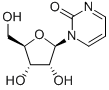
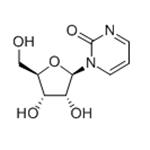
Zebularine (3690-10-6) is an orally active DNA methyltransferase inhibitor. Inhibits tumor cell proliferation (IC50 = 120 μM) and re-activates silenced genes in T24 bladder carcinoma cells. Zebularine inhibits cytidine deaminase (Ki ~ 2 μM and; induces differentiation of mesenchymal stem cells into cardiomyocytes.
Chemical Properties
White Solid
Uses
It is a cytidine analogue, cytidine deaminase inhibitor, and DNA demethylating agent.
Definition
ChEBI: Zebularine is a member of pyrimidine ribonucleosides.
Biological Activity
Orally active DNA methyltransferase inhibitor. Inhibits tumor cell proliferation (IC 50 = 120 μ M) and re-activates silenced genes in T24 bladder carcinoma cells. Also inhibits cytidine deaminase (K i ~ 2 μ M).
Biochem/physiol Actions
Zebularine is a cytidine analogue, cytidine deaminase inhibitor, and DNA demethylating agent.
Synthesis
The general procedure for the synthesis of 1-((2R,3R,4S,5R)-3,4-dihydroxy-5-(hydroxymethyl)tetrahydrofuran-2-yl)pyrimidin-2(1H)-one from the compound (CAS: 52523-24-7) was as follows: compound 15 (9.5 g, 17.6 mmol) was dissolved in methanol (100 mL) and cooled to 0 °C. To this cooled solution a methanol solution of 7N ammonia (245 mL) was slowly added. The reaction mixture was stirred at 25°C for 24 hours. Upon completion of the reaction, the solvent was removed by evaporation under reduced pressure. The residue was diluted with water and extracted with chloroform. The organic layer was dried with anhydrous magnesium sulfate, filtered and concentrated under reduced pressure. The residue was purified by silica gel column chromatography (dichloromethane: methanol = 10:1) to afford compound 16 (3.8 g, 94% yield) as a white solid. Its 1H NMR (400 MHz, methanol-d4) data were as follows: δ 8.79 (dd, J = 6.8, 2.8 Hz, 1H), 8.57 (dd, J = 4.0, 2.8 Hz, 1H), 6.58 (dd, J = 6.8, 4.4 Hz, 1H), 5.86 (s, 1H), 4.15-4.10 (m, 3H), 3.98 ( dd, J = 12.4, 2.0 Hz, 1H), 3.79 (dd, J = 12.8, 2.0 Hz, 1H).
References
[1] Patent: WO2015/72784, 2015, A1. Location in patent: Page/Page column 21; 22
[2] Journal of the Chemical Society, Perkin Transactions 1: Organic and Bio-Organic Chemistry (1972-1999), 1983, # 1, p. 127 - 130
[3] Tetrahedron Letters, 1994, vol. 35, # 10, p. 1597 - 1600
[4] Journal of Medicinal Chemistry, 1981, vol. 24, # 6, p. 662 - 666