Definition
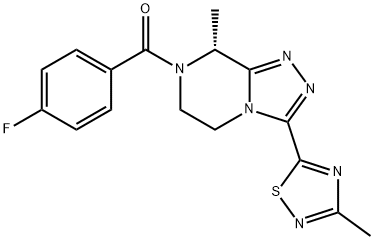
ChEBI: Fezolinetant is a triazolopyrazine that is 5,6,7,8-tetrahydro[1,2,4]triazolo[4,3-a]pyrazine substituted by 3-methyl-1,2,4-thiadiazol-5-yl, 4-fluorobenzoyl and methyl groups at positions 3, 7, and 8R, respectively. It is a prescription medicine used to reduce moderate to severe vasomotor symptoms due to menopause. It has a role as a neurokinin-3 receptor antagonist. It is a member of monofluorobenzenes, a triazolopyrazine, a member of thiadiazoles, a member of benzamides and a tertiary carboxamide.
Mechanism of action
Fezolinetant is an oral non-hormonal therapy that is an NK3R antagonist. It works by binding to and blocking the activity of NK3 receptors, which play a role in the regulation of body temperature in the brain.
Side effects
The common side effects of Fezolinetant include abdominal pain, diarrhoea, insomnia, back pain, hot flushes and elevated liver transaminases.
in vivo
Fezolinetant (ESN364, 1 mg/kg, iv bolus) reversibly inhibits the regular, pulsatile secretion of LH in the ovarectomized ewe. ESN364 represses the pulse pattern of LH in all treated animals. ESN364 (5 mg/kg, p.o.) lowers plasma LH, but not FSH, in the castrated monkey. ESN364 (10, 25, 50 mg/kg, orally) also blocks the LH surge and decreases ovarian hormone levels throughout the menstrual cycle in monkeys[1].