in vivo
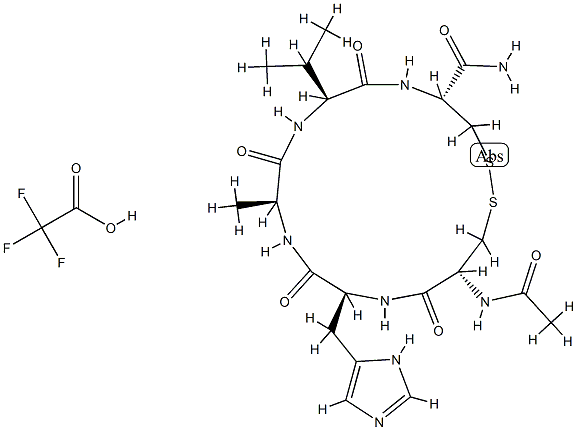
ADH-1 (50 mg/kg) significantly prevents tumor growth and metastasis in a mouse model for pancreatic cancer. ADH-1 prevents tumor cell invasion and metastasis in an orthotopic model for pancreatic cancer using N-cadherin overexpressing BxPC-3 cells[1]. ADH-1, at the dosages evaluated, does not display either antiangiogenic activity in a rat aortic ring assay or antitumor potential in a PC3 subcutaneous xenograft tumor model[2]. ADH-1 (10 mL/kg, i.p.) augmentation of melanoma tumor growth is overcome through its ability to make regionally infused melphalan more effective. ADH-1 mediated augmentation of melanoma tumor growth is not altered by regionally infused temozolomide. In A375, but not DM443 xenografts, ADH-1 treatment increases phosphorylation of AKT at serine 473. ADH-1 slightly diminishes N-cadherin expression in both xenografts[3].
References
[1] Shintani Y, et al. ADH-1 suppresses N-cadherin-dependent pancreatic cancer progression. Int J Cancer. 2008 Jan 1;122(1):71-7. DOI:
10.1002/ijc.23027[2] Li H, et al. ADH1, an N-cadherin inhibitor, evaluated in preclinical models of angiogenesis and androgen-independent prostate cancer. Anticancer Drugs. 2007 Jun;18(5):563-8. DOI:
10.1097/CAD.0b013e328020043e[3] Turley RS, et al. Targeting N-cadherin increases vascular permeability and differentially activates AKT in melanoma. Ann Surg. 2015 Feb;261(2):368-77 DOI:
10.1097/SLA.0000000000000635