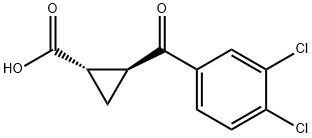
Applying an identical experimental design, separate rats were used to study the effect of KMO inhibition on the de novo synthesis of KP metabolites in the lesioned striatum. These animals were bilaterally injected with 0.1 mM UPF 648 and 3H-kynurenine in PBS. 0.1 mM UPF 648 significantly reduced the neosynthesis of 3-HK and QUIN in the lesioned striatum (by 77 % and 66%, respectively) and moderately (27%) but significantly increased the de novo formation of KYNA[1].
Administered to pregnant rats or mice on the last day of gestation, UPF 648 (50 mg/kg, i.p.) produced qualitatively similar changes (i.e., large increases in kynurenine and KYNA and reductions in 3-HK and QUIN) in the brain and liver of the offspring. Rat pups delivered by UPF 648-treated mothers and immediately exposed to neonatal asphyxia showed further enhanced brain KYNA levels[2].
UPF 648, has an IC50 of 20 nM and provides protection against intrastriatal QUIN injections in kynurenine aminotransferase (KAT II) deficient mice. UPF 648 treatment also shifts KP metabolism towards enhanced neuroprotective KYNA formation[3].