Description
Phosphoinositide 3-
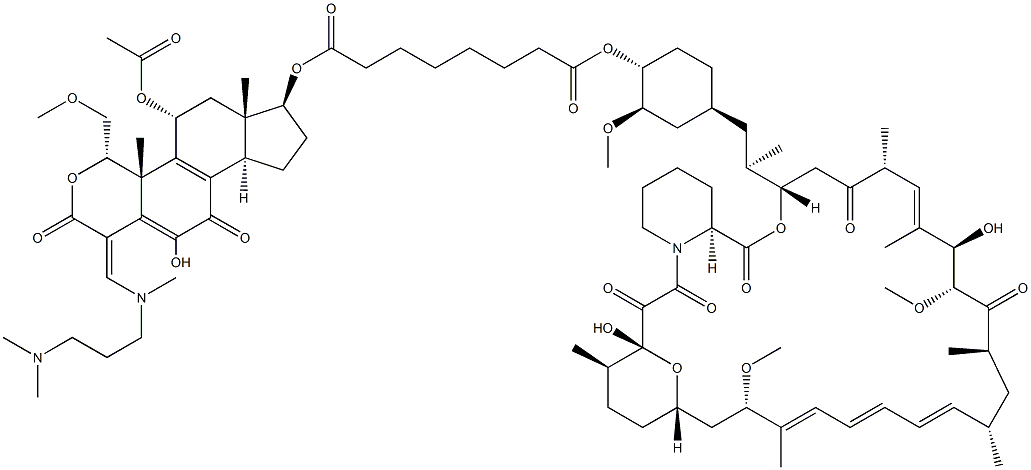
kinase (PI3K) and mammalian target of rapamycin (mTOR) act synergistically in promoting cancer. Wortmannin is a potent inhibitor of PI3K enzymes, while rapamycin blocks mTOR Complex 1 TORC1. Wortmannin-
rapamycin conjugate consists of analogs of 17-
hydroxy wortmannin and rapamycin conjugated
via a prodrug linker. Hydrolysis of the prodrug linker
in vivo releases the inhibitors. The wortmannin-
rapamycin conjugate inhibits the growth of HT-29 colon tumors and A498 renal tumors in mice better than rapamycin alone. Also, the conjugate, when given in combination with the VEGF-
blocker bevacizumab, produces substantial regression of larger A498 tumors. Finally, the wortmannin-
rapamycin conjugate is tolerated better than an equivalent mixture of the inhibitors.
in vivo
Wortmannin-Rapamycin Conjugate 1 (3,5 mg/kg, i.v., weekly for 13 d) exerts significant antitumor activity on U87MG mouse xenogrgaft model[1].
Wortmannin-Rapamycin Conjugate 1 (15 mg/kg, i.v., 2 h) significantly inhibits the AKT phosphorylation in the tumor of U87MG mouse xenogrgaft model[1].
Wortmannin-Rapamycin Conjugate 1 (15 mg/kg, i.v., weekly for 20 d ) completely inhibits the growth of HT29 colon tumor, a non-sensitive colon tumor model to rapamycin or wortmannin analogues in tumor-bearing mice[1].
Wortmannin-Rapamycin Conjugate 1 (30 mg/kg, i.v., weekly for 38 d ) exerts a substantial regression of larger A498 tumors with 200 μg Bevacizumab (HY-P9906) in A498 tumor-bearing mice[1].
| Animal Model: | HT29 bearing nude mice[1] |
| Dosage: | 15 mg/kg, weekly for 20 d |
| Administration: | Intravenous injection (i.v.) |
| Result: | Showed no significant growth in tumor volume while an equivalent physical mixture of the Rapamycin and Wortmannin derivative was poorly tolerated. |
References
[1] Ayral-Kaloustian S, et al. Hybrid inhibitors of phosphatidylinositol 3-kinase (PI3K) and the mammalian target of rapamycin (mTOR): design, synthesis, and superior antitumor activity of novel wortmannin-rapamycin conjugates. J Med Chem. 2010 Jan 14;53(1):452-9. DOI:
10.1021/jm901427g