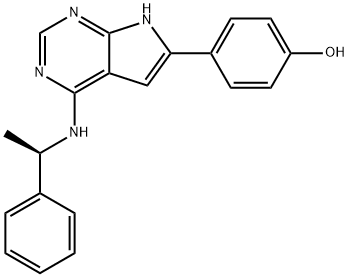
Uses
PKI-166 is a potent, selective and orally bioavailable EGFR tyrosine kinase inhibitor, with an IC50 of 0.7 nM[1].
Biological Activity
PKI-166 is a potent, selective and orally bioactive EGFR tyrosine kinase inhibitor with IC50 of 0.7 nM.
in vitro
Pretreatment with PKI-166 (0-0.5 μM; 1 hour) inhibits EGFR autophosphorylation in human pancreatic cancer cells.
PKI-166 (0.03 μM; 6 days) enhanced the cytotoxicity mediated by gemcitabine .
Western Blot Analysis
| Cell Line: | L3.6pl cells |
| Concentration: | 0.01 μM, 0.05 μM, 0.5 μM |
| Incubation Time: | 1 hour |
| Result: | Inhibited EGFR autophosphorylation in a dose-dependent manner. |
Cell Cytotoxicity Assay
| Cell Line: | L3.6pl cells |
| Conce ntration: | 0.03 μM |
| Incubation Time: | 6 days |
| Result: | Enhanced the cytotoxicity mediated by gemcitabine. |
in vivo
PKI-166 (100 mg/kg; po; daily; day 7-day 35 after xenograft) inhibits of pancreatic cancer growth.
| Animal Model: | Male athymic nude mice with L3.6pl cells xenograft (8–12 weeks) |
| Dosage: | 100 mg/kg |
| Administration: | Oral administration; daily; from day 7 to day 35 after xenograft |
| Result: | Significantly decreased median tumor volume. |
target
IC50: 0.7 nM (EGFR tyrosine kinase)
References
[1] Bruns CJ, et al. Blockade of the epidermal growth factor receptor signaling by a novel tyrosine kinase inhibitor leads to apoptosis of endothelial cells and therapy of human pancreatic carcinoma. Cancer Res. 2000 Jun 1;60(11):2926-35. PMID:10850439