in vivo
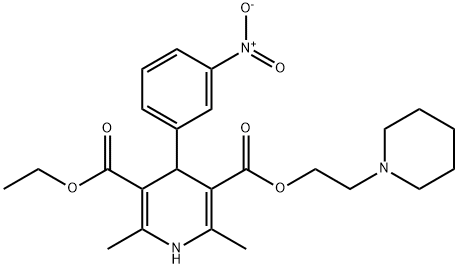
YS-201 (Diperdipine) markedly reduces systemic vascular resistance and improves stroke index and left ventricular ejection fraction. Mean pulmonary artery and wedge pressures are slightly increased as a possible consequence of enhanced venous return, whereas right atrial and left ventricular end-diastolic pressures are not significantly changed. Nevertheless, an increase in preload is clearly indicated by an augmented left ventricular end-diastolic volume index after administration of diperdipine[1]. After intravenous and oral doses, absolute bioavailability is calculated to be 18.7%. Biliaryexcretion accounts for about 0.1% of the total clearance of diperdipine and does not contribute to the overall elimination of the drug. After intraportal administration, the bioavailable fraction of diperdipine is increasing up to 44.3% suggesting a prehepatic site of loss of the drug[2]. The single application of diperdipine to mice and rats by gavage causes intolerance reactions starting at the lowest tested dose level of 200 mg/kg b.w. p.o. (mice) and at 250 mg/kg b.w. p.o. (rats). In the rat, toxic effects occur from 15 mg diperdipine/kg b.w./day p.o. onwards[3].
References
[1] Di Donato M, et al. Acute hemodynamic effects of intravenous diperdipine, a new dihydropyridine derivative, in coronary heart disease. Am Heart J. 1991 Mar;121(3 Pt 1):776-81. DOI:
10.1016/0002-8703(91)90188-n[2] Greiner PO, et al. Evaluation of first pass effect and biliary excretion of diperdipine in the dog. Eur J Drug Metab Pharmacokinet. 1990 Jul-Sep;15(3):185-90. DOI:
10.1007/BF03190202[3] Herzog R, et al. Experimental studies on the toxicity of diperdipine following oral and parenteral application. Arzneimittelforschung. 1995 Mar;45(3):240-5. PMID:7741776