Background
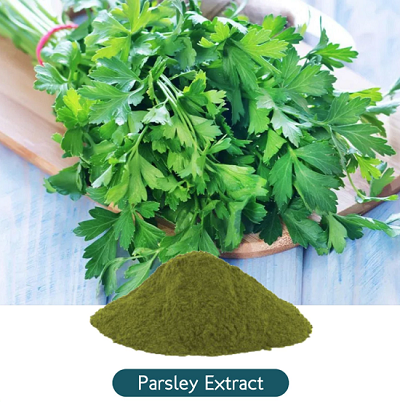
Parsley (Petroselinum crispum L.) is a widely used herb known for its rich polyphenolic content, making it an attractive source for extracting natural antioxidants. Parsley is a popular herb often used in American, European, and Middle Eastern cooking. It’s commonly used to elevate the flavour of soups, salads, and fish recipes. Aside from its many culinary uses, parsley is highly nutritious and has been shown to have many powerful health benefits. Polyphenols present in parsley are complex mixtures of various phytochemicals, including quercetin, myricetin, apigenin, p-coumaric acid, etc. Some of these compounds exist in glycoside forms, meaning that during the extraction process, they are recovered in glycosidic form. The presence of the glycosides in the phenolic extracts can block the radical scavenging group of the molecule, limiting its antioxidant activity.
Chemical Properties
Parsley seed oil is obtained by steam distillation of ripe fruits of parsley. It is
an almost colorless to amber-yellow liquid whose dry odor is characteristic
of the crushed fruit, but different from that of the green parts of the plant.
d
2020 1.043–1.083; n
20D 1.5130–1.5220; α
20D 10 ° to 4 °; acid number:max. 4; ester number: min. 1, max. 10; solubility: 1 vol in at least 6 vol of 85% ethanol.
Characteristic components of parsley seed oil are myristicin
(25–50%), apiol (5–35%), and 2,3,4,5-tetramethoxyallylbenzene (1–12%).
Uses
parsley extract (Petroselinum sativum) serves as a deodorant. It is said to have disinfectant, anti-inflammatory, and skinconditioning properties.
