Description
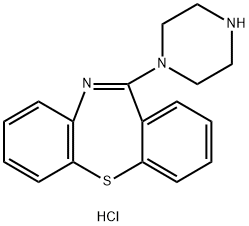
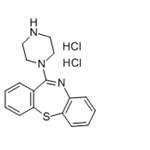
Norquetiapine 2HCl (111974-74-4) is a pharmacologically active metabolite of quetiapine (Seroquel).1 Exhibits distinct pharmacological activity from quetiapine and plays an important role in its antidepressant activity.2 Activates ERK1/2 and induces release of BDNF in C6 glioma cells which may contribute to the antidepressant properties of quetiapine.3Inhibits the norepinephrine transporter which may contribute to the antipsychotic activity of quetiapine.4
Chemical Properties
11-(1-Piperazinyl)-dibenzo[b,f][1,4]thiazepine dihydrochloride is Pale-Yellow Solid
Uses
11-(1-Piperazinyl)-dibenzo[b,f][1,4]thiazepine dihydrochloride is a metabolite of Quetiapine, a Benzothiazepine with mixed serotonin and dopamine receptor antagonistic properties used as an antipsychotic
Uses
N-Des[2-(2-hydroxyethoxy)ethyl] Quetiapine Dihydrochloride (Quetiapine EP Impurity B) is a metabolite of Quetiapine, a Benzothiazepine with mixed serotonin and dopamine receptor antagonistic properties used as an antipsychotic.
References
[1] A CARLO ALTAMURA. Effect of quetiapine and norquetiapine on anxiety and depression in major psychoses using a pharmacokinetic approach: a prospective observational study.[J]. Clinical Drug Investigation, 2012, 32 3: 213-219. DOI:
10.2165/11597330-000000000-00000[2] FRANCISCO LÓPEZ-MUÑOZ Cecilio A. Active metabolites as antidepressant drugs: the role of norquetiapine in the mechanism of action of quetiapine in the treatment of mood disorders.[J]. Frontiers in Psychiatry, 2013: 102. DOI:
10.3389/fpsyt.2013.00102[3] BARBARA DI BENEDETTO . N-desalkylquetiapine activates ERK1/2 to induce GDNF release in C6 glioma cells: A putative cellular mechanism for quetiapine as antidepressant[J]. Neuropharmacology, 2012, 62 1: Pages 209-216. DOI:
10.1016/j.neuropharm.2011.07.001[4] CARL BJÖRKHOLM . Role of concomitant inhibition of the norepinephrine transporter for the antipsychotic effect of quetiapine[J]. European Neuropsychopharmacology, 2013, 23 7: Pages 709-720. DOI:
10.1016/j.euroneuro.2012.05.012