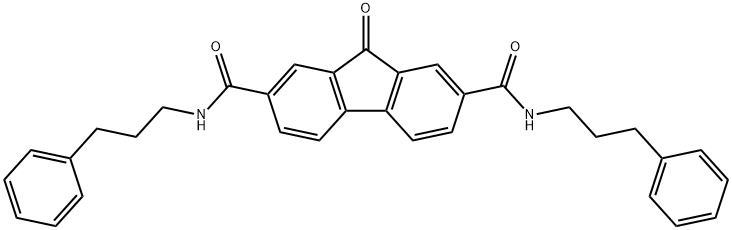
Description
GPI-16552 (443794-40-9) is a novel potent inhibitor of poly(ADP-ribose) glycohydrolase (PARG), IC50=1.7 μM.1 Pre or post ischemia treatment (40 mg/kg) with GPI-16552 reduces brain infarct volumes in a rat model of cerebral ischemia.2It modulates the inflammatory response to ischemia/reperfusion in a rat splanchnic artery occlusion model3and reduces the degree of spinal cord inflammation and tissue injury after experimental spinal cord trauma4. GPI-16552 synergizes with temozolomide in decreasing melanoma cell invasion and metastatic spreading in mice injected with B16 melanoma cells.5
References
[1] JIE ZHANG J L. PARP and PARG as novel therapeutic targets[J]. Drugs of The Future, 2002, 27 1: 371-383. DOI:
10.1358/dof.2002.027.04.669101[2] XI-CHUN M. LU . Post-treatment with a novel PARG inhibitor reduces infarct in cerebral ischemia in the rat[J]. Brain Research, 2003, 978 1: Pages 99-103. DOI:
10.1016/s0006-8993(03)02774-4[3] SALVATORE CUZZOCREA. PARG activity mediates intestinal injury induced by splanchnic artery occlusion and reperfusion[J]. FASEB Journal, 2005, 19 6: 558-566. DOI:
10.1096/fj.04-3117com[4] SALVATORE CUZZOCREA. Poly(ADP-ribose) glycohydrolase activity mediates post-traumatic inflammatory reaction after experimental spinal cord trauma.[J]. Journal of Pharmacology and Experimental Therapeutics, 2006, 319 1: 127-138. DOI:
10.1124/jpet.106.108076[5] LUCIO TENTORI . Poly(ADP-ribose) glycohydrolase inhibitor as chemosensitiser of malignant melanoma for temozolomide[J]. European Journal of Cancer, 2005, 41 18: Pages 2948-2957. DOI:
10.1016/j.ejca.2005.08.027