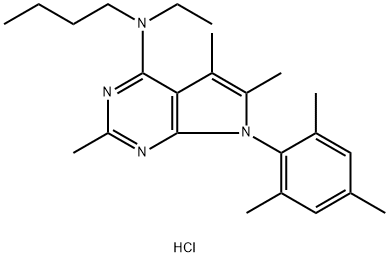
Description
Corticotropin-
releasing hormone (CRH) secreted from the hypothalamus is the major regulator of pituitary corticotropin-
release and consequent glucocorticoid secretion. Antalarmin is a selective, nonpeptide antagonist of the CRH receptor 1 (K
i = 1 nM) that, consequently, reduces the release of corticotropin in response to chronic stress. Through its antagonism of central CRH signaling, antalarmin can reduce endocrinological, cardiovascular, and behavioral responses to stressful stimuli. It has also been shown to reduce dose escalation in cocaine-
addicted rats, to produce anti-
inflammatory effects in arthritis models, and to suppress stress-
induced gastric ulceration related to irritable bowel syndrome.
Uses
Antalarmin hydrochloride is a non-peptide CRF1 corticotropin-releasing factor receptor antagonist.
Biological Activity
Non-peptide corticotropin-releasing hormone receptor 1 (CRF 1 ) antagonist (K i = 1 nM). Suppresses CRF-induced ACTH secretion. Blocks CRF- and novelty-induced anxiety-like behavior in animal models of anxiety.
Biochem/physiol Actions
Antalarmin serves as a non steroidal inhibitor of pregnancy even during the early stages. It is known to delay parturition. It also prevents the development of gastric ulcers which arises in response to stress.
storage
Desiccate at +4°C
References
[1] E L WEBSTER. In vivo and in vitro characterization of antalarmin, a nonpeptide corticotropin-releasing hormone (CRH) receptor antagonist: suppression of pituitary ACTH release and peripheral inflammation.[J]. Endocrinology, 1996, 137 12: 5747-5750. DOI:
10.1210/endo.137.12.8940412[2] T DEAK. The impact of the nonpeptide corticotropin-releasing hormone antagonist antalarmin on behavioral and endocrine responses to stress.[J]. Endocrinology, 1999, 140 1: 79-86. DOI:
10.1210/endo.140.1.6415[3] HESHAM FAHMY. The “homeostasis hormone” and its CRF receptor. From structure to function.[J]. Hormones-International Journal of Endocrinology and Metabolism, 2012, 11 3: 254-271. DOI:
10.14310/horm.2002.1355