Chemical Properties
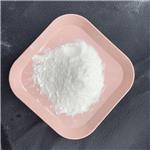
white to light yellow crystal powde
Uses
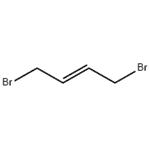
(2E)-1,4-Dibromo-2-butene, is used as a reagent in the preparation of diaminoalkenes though copper-mediated diamination reaction.
Synthesis Reference(s)
The Journal of Organic Chemistry, 36, p. 3324, 1971
DOI: 10.1021/jo00821a012
General Description
Crystals or white crystalline solid.
Air & Water Reactions
(E)-1,4-Dibromobut-2-ene may be sensitive to exposure to light and air. Insoluble in water.
Reactivity Profile
(E)-1,4-Dibromobut-2-ene is incompatible with strong oxidizers and strong bases.
Fire Hazard
(E)-1,4-Dibromobut-2-ene is probably combustible.
Synthesis
Example 1 (E)-1,4-dibromo-2-butene (A) Synthesis: 1,3-butadiene (60 mL, 0.70 mol) was added to a 500 mL round-bottomed flask and the flask was placed in a -78 °C cooling bath. Carbon tetrachloride (CCl4, 100 mL) pre-cooled to -20 °C was slowly added to the flask to ensure that the temperature of the reaction mixture was maintained below -20 °C. Subsequently, bromine was added dropwise over a period of 2 hours. The reaction mixture was stirred vigorously at room temperature for 14 hours. After completion of the reaction, most of the solvent was evaporated under reduced pressure. The crude product was purified by recrystallization from cold hexane to afford white crystalline 1,4-dibromo-2-butene (A) (62.4 g, 0.29 mmol) in 58% yield. Thin layer chromatography (TLC) showed an Rf value of 0.74 (unfolding agent ratio hexane:ethyl acetate = 4:1). Nuclear magnetic resonance hydrogen spectroscopy (1H NMR, 300.40 MHz, CDCl3) data were as follows: δ 3.89-4.02 (m, 4H), 5.90-6.05 (m, 2H) ppm.
Purification Methods
Crystallise the dibromide from ligroin and/or distil it in a vacuum. [Beilstein 1 IV 79.]
References
[1] Journal of the American Chemical Society, 2014, vol. 136, # 43, p. 15403 - 15413
[2] Patent: US2008/262271, 2008, A1. Location in patent: Page/Page column 6
[3] Patent: WO2006/38764, 2006, A1. Location in patent: Page/Page column 9-10
[4] Chemische Berichte, 1938, vol. 71, p. 1679
[5] Angewandte Chemie, 1938, vol. 51, p. 919