Chemical Properties
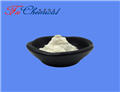
white crystalline powder
Uses
A mucolytic. An effective drug for the treatment of liver failure. Shown to effectively inhibit the binding of ethynylestradiol metabolites to protein and nucleic acids.
Uses
L-Cysteine methyl ester hydrochloride is a biochemical shown to inhibit binding of ethynylestradiol metabolites to protein and nucleic acids. It used in the synthesis of peptides, Preparation of thiazolidine-4-carboxylates with carbonyl compounds.
Definition
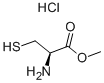
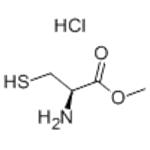
ChEBI: Mecysteine hydrochloride is an alpha-amino acid ester.
Preparation
L-Cysteine methyl ester hydrochloride is prepared by esterification of L-cysteine hydrochloride monohydrate with methanol in the presence of hydrogen chloride.
reaction suitability
reaction type: solution phase peptide synthesis
Trade name
Acthiol (Joullié, France), Actiol (Lirca, Italy), Visclair (Sinclair, UK), Aslos-C (Nissin, J), Epectan (Seiko, Japan), Moltanine (Tohok.-Tokyo Tanabe, Japan), Radcol (Nippon Universal, Japan), Sekinin (Tokyo Hosei, Japan).
Synthesis
3 mL of sulfoxide chloride (SOCl2) was slowly added dropwise to 35 mL of methanol under nitrogen protection in an ice bath. Subsequently, the reaction mixture was stirred at room temperature for 1 hour. After that, 1 g of L-cysteine hydrochloride monohydrate (Cys-HCl-H2O) was added to the above solution in batches. The reaction was continued with the mixed solution at room temperature for 3 hours and then heated to reflux for 1 hour. Upon completion of the reaction, the volatile components and solvent were removed by distillation under reduced pressure, and the resulting residue was recrystallized using a solvent mixture of methanol-dichloromethane (CH3OH-CH2Cl2) to give 0.84 g of the white solid product L-cysteine methyl ester hydrochloride in 85.9% yield. The product was analyzed by infrared spectroscopy (IR, KBr press) showing characteristic absorption peaks: 3040.4 cm-1 (strong, NH2 stretching vibration), 1709.7 cm-1 (strong, C=O stretching vibration), 2580 cm-1 (weak, SH stretching vibration). The nuclear magnetic resonance hydrogen spectrum (1H NMR, D2O as solvent, TMS as internal standard) data were as follows: δ 4.453 (t, 1H, CH, J = 5.2 Hz), 3.871 (s, 3H, CH3), 3.164 (t, 2H, CH2, J = 6.4 Hz). Elemental analysis results: Calculated values (C4H10NO2SCCl): C, 27.99%; H, 5.87%; N, 8.16%. Measured values: C, 28.11%; H, 6.01%; N, 8.08%.
References
[1] European Journal of Medicinal Chemistry, 2014, vol. 74, p. 199 - 215
[2] Journal of Organic Chemistry, 2013, vol. 78, # 9, p. 4270 - 4277
[3] Tetrahedron Asymmetry, 2000, vol. 11, # 21, p. 4255 - 4261
[4] Journal of the American Chemical Society, 2008, vol. 130, # 15, p. 5052 - 5053
[5] European Journal of Medicinal Chemistry, 2012, vol. 55, p. 176 - 187,12