in vivo
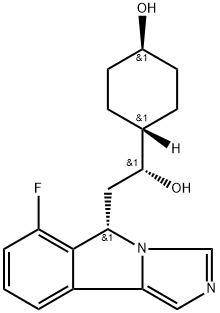
VNavoximod (NLG919) is orally bioavailable (F>70%); and has a favorable pharmacokinetic and toxicity profile. In mice, a single oral administration of Navoximod reduces the concentration of plasma and tissue Kyn by ~50%. In vivo, in mice bearing large established B16F10 tumors, administration of Navoximod markedly enhances the anti-tumor responses of nave, resting pmel-1 cells to vaccination with cognate hgp100 peptide plus CpG-1826 in IFA. In this stringent established-tumor model, Navoximod plus pmel-1/vaccine produce a dramatic collapse of tumor size within 4 days of vaccination (~95% reduction in tumor volume compare to control animals receiving pmel-1/vaccine alone without Navoximod)[1]. When combined with NSC 362856 (TMZ)+radiation therapy (RT), both Navoximod and D-1MT (Indoximod) enhance survival relative to mice treated with TMZ+RT alone[2].
References
[1] Mario R. Mautino, et al. Abstract 491: NLG919, a novel indoleamine-2,3-dioxygenase (IDO)-pathway inhibitor drug candidate for cancer therapy. AACR 104th Annual Meeting 2013; Apr 6-10, 2013.
[2] Li M, et al. The indoleamine 2,3-dioxygenase pathway controls complement-dependent enhancement of chemo-radiation therapy against murine glioblastoma. J Immunother Cancer. 2014 Jul 7;2:21. DOI:
10.1186/2051-1426-2-21[3] Chen Y, et al. An immunostimulatory dual-functional nanocarrier that improves cancer immunochemotherapy. Nat Commun. 2016 Nov 7;7:13443. DOI:
10.1038/ncomms13443