Uses
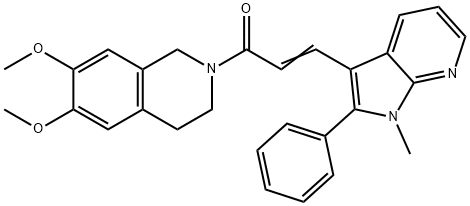
SMAD3 Inhibitor, SIS3 selectively inhibits TGF-β and activin. It has been shown to reduce TGF-β1-induced type 1 procollagen expression and myofibroblast differentiation in normal dermal fibroblasts as well as scleroderma fibroblasts.
Definition
ChEBI: An enamide resulting from the formal condensation of the amino group of 6,7-dimethoxy-1,2,3,4-tetrahydroisoquinoline with the carboxy group of (2E)-3-(1-methyl-2-phenyl-1H-pyrrolo[2,3-b]pyridin-3-yl)acrylic
cid.
Biological Activity
Primary Target
TGF-β1-dependent Smad3 phosphorylation and Smad3-mediated cellular signaling', 'The specific inhibitor of Smad3 (SIS3) is a pyrrolopyridine compound. It selectively blocks transforming growth factor (TGF)-β1-dependent mothers against decapentaplegic homolog 3 (Smad3) phosphorylation and Smad3-mediated cellular pathway without affecting Smad2, p38 mitogen-activated protein kinase (MAPK), extracellular-signal-regulated kinase (ERK), or phosphoinositide 3-kinase (PI3K) signaling. Through its inhibitory function, SIS3 regulates fibrosis, apoptosis, and inflammation in mouse unilateral ureteral obstruction (UUO) kidneys. Therefore, SIS3 can be an effective drug in further anti-fibrosis treatment of kidney disease.
in vivo
E/Z-SIS3 free base (2 mg/kg, i.p.) inhibits smad3 phosphorylation and levels of TGF-β1, ameliorates bleomycin (BLM)-induced pulmonary fibrosis (PF) and inflammation in C57BL/6J mice[1].
| Animal Model: | BLM-induced PF in C57BL/6J mice[1] |
| Dosage: | 2 mg/kg |
| Administration: | i.p., every two days for 3 weeks |
| Result: | Inhibited the fibrosis and collagen deposition in lung.
Reduced numbers of lymphocytes, macrophages, and neutrophils in bronchoalveolar Lavage (BAL). |