Description
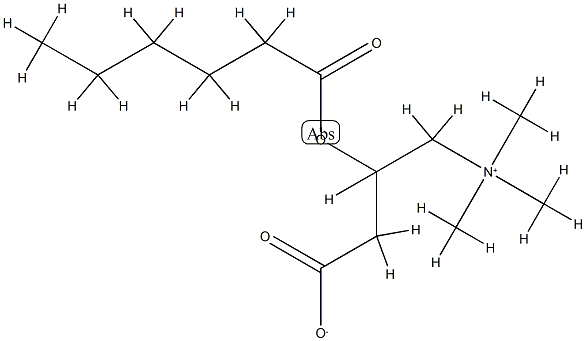
(C6) Hexanoylcarnitine plays an important role in energy homeostasis and is involved in the transport of fatty acids. Hexanoylcarnitine chloride is also a nonspecific acetylcholine receptor agonist. Animal experiments have demonstrated the potential of hexanoylcarnitine as a specific and readily detectable biomarker of skeletal muscle toxicity. Hexanoylcarnitine plays a role in plant defense mechanisms. Hexanoylcarnitine can be used as a precursor in the synthesis of complex compounds, and also as a standard for qualitative determination in various techniques.
The product is used primarily as a control for MS/MS.
Uses
(±)-Hexanoylcarnitine exists in human urine and plasma. (±)-Hexanoylcarnitine can be used as a plasma detection indicator in patients with methylmalonic aciduria, propionic acidemia, and medium-chain acyl-CoA dehydrogenase deficiency[1].
Definition
ChEBI: An O-acylcarnitine compound having hexanoyl as the acyl substituent.
References
[1] P E Minkler, et al. Quantification of free carnitine, individual short- and medium-chain acylcarnitines, and total carnitine in plasma by high-performance liquid chromatography. Anal Biochem. 1993, 212, 2. DOI:
10.1006/abio.1993.1361