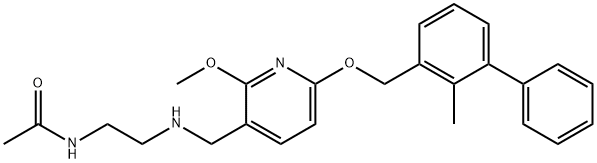
Description
The programmed death-1/programmed death-ligand 1 (PD-1/PD-L1) interaction plays a dominant role in the suppression of T cell responses, especially in a tumor microenvironment, protecting tumor cells from lysis. PD-1/PD-L1 inhibitor 2 is reported to prevent the interaction of PD-L1 with PD-1 with an IC
50 value of 18 nM.
Uses
BMS-202 is a Novel inhibitor of the PD-1/PD-L1 interaction by inducing PD-L1 dimerization through PD-1 interacting surface.
in vivo
BMS-202 (20 mg/kg; intraperitoneal injection; daily; for 9 days; NOG-dKO mice) treatment shows a clear antitumor effect compared with the controls, in humanized MHC- dKO NOG mice[2].
| Animal Model: | NOG-dKO mice (8-week-old) injected with SCC-3 cells[2] |
| Dosage: | 20 mg/kg |
| Administration: | Intraperitoneal injection; daily; for 9 days |
| Result: | Showed 41% growth inhibitory activity against humanized mouse-transplanted human lymphoma SCC-3 cells.
|
References
[1] KRZYSZTOF M ZAK. Structural basis for small molecule targeting of the programmed death ligand 1 (PD-L1).[J]. Oncotarget, 2016: 30323-30335. DOI:
10.18632/oncotarget.8730[2] KATARZYNA GUZIK. Small-Molecule Inhibitors of the Programmed Cell Death-1/Programmed Death-Ligand 1 (PD-1/PD-L1) Interaction via Transiently Induced Protein States and Dimerization of PD-L1[J]. Journal of Medicinal Chemistry, 2017, 60 13: 5857-5867. DOI:
10.1021/acs.jmedchem.7b00293