Uses
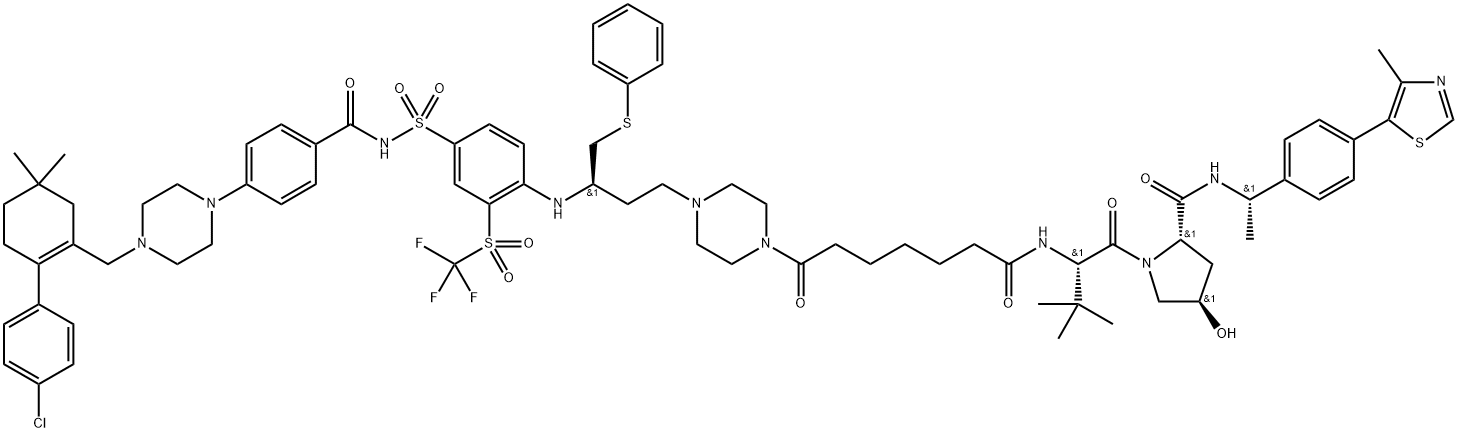
DT2216 is a potent and selective BCL-XL (Bcl-2 family member) degrader based on PROTAC technology. DT2216 causes effective degradation of BCL-XL protein by recruiting Von Hippel-Lindau (VHL) E3 ubiquitin ligase. DT2216 inhibits various BCL-XL-dependent leukemia and cancer cells but considerably less toxic to platelets. DT2216 is composed of the Bcl-2 family protein inhibitor Navitoclax (HY-10087), a linker, and a VHL E3 ubiquitin ligase (Red: Navitoclax; Blue: VHL ligand; Black: linker)[1].
Biological Activity
DT2216 is a selective BCL-XL, but not BCL-2 or BCL-W, degrader composed of a von Hippel-Lindau (VHL) E3 ligase-targeting ligand linked to a ABT-263 (navitoclax) derivative. DT2216 is more potent than ABT-263 against BCL-XL-dependent leukemia (MOLT-4 IC50 = 52 vs 191 nM) and cancer cells (MDA-MB-231 IC50 = 229 vs 707 nM). DT2216 effectively inhibits the growth of several xenograft tumors in vivo either alone (15 mg/kg/wk i.p.) or in combination with other chemotherapeutic agents (docetaxel or VDL), exhbiting improved efficacy and reduced thrombocytopenia when compared with ABT-263 as a result of greatly reduced platelet toxicity due to poor VHL expression in platelets.
in vivo
DT2216 (i.p.; 7.5, 15 mg/kg; weekly for 60 days) of 15 mg/kg is more effective at suppressing the growth of MOLT-4 T-ALL xenografts in mice than 7.5 mg/kg[1].
| Animal Model: | CB17/Icr-Prkdcscid/IcrIcoCrl (CB-17 SCID) mice aged 5-6 weeks[1] |
| Dosage: | 7.5, 15 mg/kg |
| Administration: | i.p.; weekly for 60 days |
| Result: | Suppressed the growth of MOLT-4 T-ALL xenografts in mice.
|
References
[1] Khan S, et al. A selective BCL-XL PROTAC degrader achieves safe and potent antitumor activity. Nat Med. 2019 Dec;25(12):1938-1947. DOI:
10.1038/s41591-019-0668-z