Description
Trade names: “Kasugamin,” “Kasumin” Patent: JP
42006818; BE 657659: GB 1094566. Systemic fungicide
and bactericide with protective and curative action.
Controls rice blast caused by Pyricularia oryzae and
other rice diseases, such as bacterial grain rot, bacterial
seedling blight, and bacterial brown stripe caused
by Pseudomonas spp. (15). Effective on other plant diseases,
e.g., leaf mold and bacterial canker in tomatoes,
bean halo blight, scab on apples, Cercospora spp. leaf
spot on sugar beet, and bacterial soft rot on potatoes.
Chemical Properties
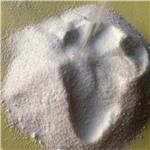
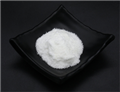
Its hydrochloride is white needle-like or flaky crystals. m.p. 206~210℃ (202~204℃,236~239℃). Insoluble in methanol, ethanol, propanol, benzene and other organic solvents, soluble in water. Stable in acidic or neutral medium, easy to destroy and fail in alkali, under the condition of pH 5, stored at 50℃ for 10 weeks, there is no decrease in potency, while on the condition of pH 9, the potency decreases to 42.6%.
Uses
Kasugamycin is an antibiotic aminoglycoside that inhibits protein synthesis.
Definition
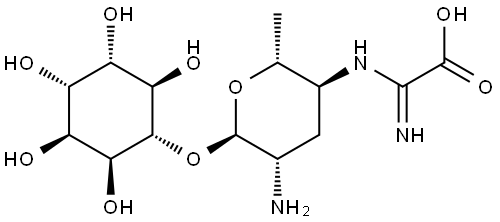
ChEBI: An amino cyclitol glycoside that is isolated from Streptomyces kasugaensis and exhibits antibiotic and fungicidal properties.
General Description
Kasugamycin was found in the culture broth of Streptomyces kasugaensis by Umezawa et al. in 1965. It has an aminocyclitol structure and shows strong activity against phytopathogenic fungi, especially Pericularia oryzae, the pathogen causing rice blast. This drug also shows activity against Pseudomonas, and its toxicity is very low; no mice died following intravenous injection of doses as high as two grams per kilogram. Kasugamycin has been used to protect rice plants against rice blast and for animal infections.
Toxicity evaluation
Nonphytotoxic to rice, tomatoes, sugar beet, potatoes,
and other vegetables, but slightly toxic to peas, beans,
grapes, citrus, and apples.