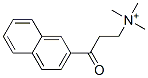
Description
Choline acetyltransferase (ChAT) mediates the synthesis of the neurotransmitter acetylcholine from acetyl-
CoA and choline. In addition to its critical role in neurosignaling, deficiencies in ChAT are linked to congenital myasthenic syndromes, Alzheimer’s disease, and multiple sclerosis. α-
NETA is a stable, non-
competitive, and slowly reversible inhibitor of ChAT (IC
50 = 9 μM). This naturally fluorescent compound is a poor inhibitor of cholinesterases and carnitine acetyltransferase. α-
NETA is commonly used in cells in culture.
Uses
alpha-NETA is a fluorescent choactase inhibitor.
Uses
Choline acetyltransferase (ChAT) mediates the synthesis of the neurotransmitter acetylcholine from acetyl-CoA and choline. In addition to its critical role in neurosignaling, deficiencies in ChAT are linked to congenital myasthenic syndromes, Alzheimer’s disease, and multiple sclerosis. α-NETA is a stable, non-competitive, and slowly reversible inhibitor of ChAT (IC50 = 9 μM). This naturally fluorescent compound is a poor inhibitor of cholinesterases and carnitine acetyltransferase. α-NETA is commonly used in cells in culture.[Cayman Chemical]
References
[1] B V SASTRY. 2-(alpha-Naphthoyl)ethyltrimethylammonium iodide and its beta-isomer: new selective, stable and fluorescent inhibitors of choline acetyltransferase.[J]. Journal of Pharmacology and Experimental Therapeutics, 1988, 245 1: 72-80.
[2] B.V. RAMA SASTRY. Relationships between chemical structure and inhibition of choline acetyltransferase by 2-(α-naphthoyl)ethyltrimethylammonium and related compounds[J]. Pharmacological research communications, 1988, 20 9: Pages 751-771. DOI:
10.1016/s0031-6989(88)80715-x[3] B.M. EATON S. R S. Regulation of the choline transport system in superfused microcarrier cultures of BeWo cells[J]. Placenta, 1998, 19 8: Pages 663-669. DOI:
10.1016/s0143-4004(98)90028-5[4] DEBORAH A SAWATZKY. Eosinophil-induced release of acetylcholine from differentiated cholinergic nerve cells.[J]. American journal of physiology. Lung cellular and molecular physiology, 2003, 285 6: L1296-304. DOI:
10.1152/ajplung.00107.2003