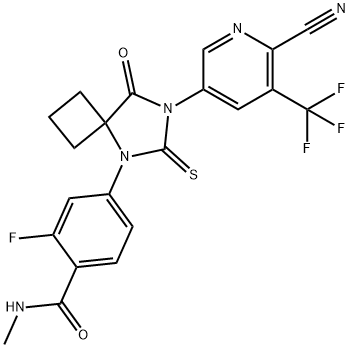
Uses
Apalutamide is a second-generation antiandrogen used in the treatment of prostate cancer. It is a potent antagonist of androgen receptor with IC50 value of 16 nM. Binds androgen receptors, thereby inhibiting nuclear translocation, DNA binding and transcriptional activation. ARN-509 has therapeutic applications in non-metastatic, castration-resistant prostate cancer.
Pharmaceutical Applications
Apalutamide, also known as ARN-509, is used to treat certain types of castration-resistant prostate cancer or prostate cancer that has not spread to other parts of the body, but has not been helped by other medical treatments. Apalutamide is in a class of medications called androgen receptor inhibitors. It works by blocking the effects of androgen to stop the growth and spread of cancer cells.
On September 17, 2019, the Food and Drug Administration approved apalutamide (ERLEADA, Janssen Biotech, Inc) for patients with metastatic castration-sensitive prostate cancer (mCSPC). Apalutamide was initially approved in 2018 for patients with non-metastatic castration-resistant prostate cancer.
Mechanism of action
Apalutamide, also known as ARN-509 and JNJ-56021927 , is an androgen receptor antagonist with potential antineoplastic activity. ARN-509 binds to AR in target tissues thereby preventing androgen-induced receptor activation and facilitating the formation of inactive complexes that cannot be translocated to the nucleus. This prevents binding to and transcription of AR-responsive genes. This ultimately inhibits the expression of genes that regulate prostate cancer cell proliferation and may lead to an inhibition of cell growth in AR-expressing tumor cells.